
How to Get Rid of Mealybugs on Houseplants and Outdoor Plants
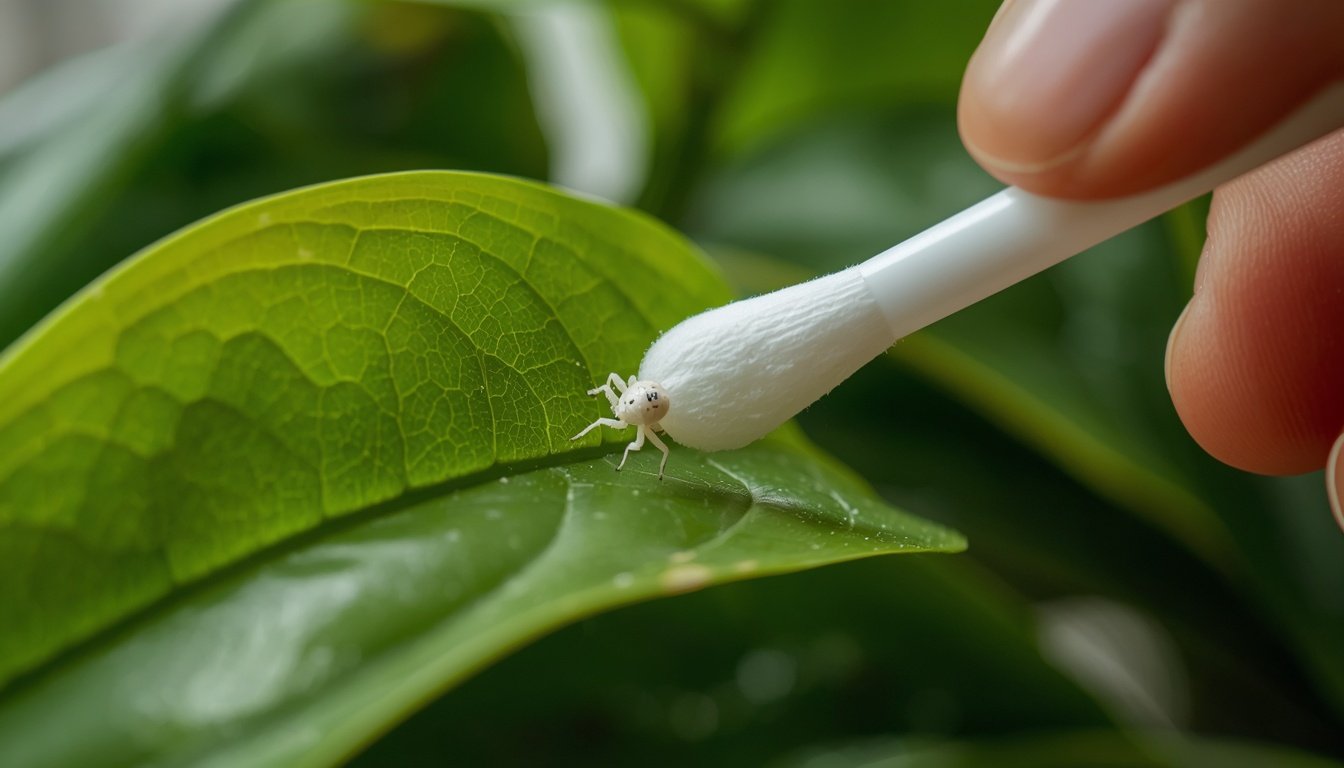
Mealybugs are one of the more frustrating pests a plant owner can face, mainly because a treatment that looks successful can fail within a few weeks. Understanding why that happens is the real key to getting rid of them for good.
Quick Answer (How to Get Rid of Mealybugs)
Isolate the infested plant, then remove visible mealybugs by hand or with a diluted isopropyl alcohol swab, followed by a direct treatment such as insecticidal soap, horticultural oil, or neem oil. Treat weekly, since a single application rarely reaches eggs, crawlers, and mealybugs hiding in leaf joints, and inspect nearby plants for early signs.
Quick Diagnosis Table
| What You See | What It May Mean | What To Check | First Action |
| White cotton like clusters on stems or leaf joints | Mealybug colony with egg sacs | Leaf axils, stem crevices, plant crown | Isolate the plant and inspect closely |
| Sticky film on leaves or nearby surfaces | Honeydew from feeding mealybugs | Undersides of leaves, area below the plant | Wipe leaves, then begin treatment |
| Black powdery coating over sticky leaves | Sooty mold growing on honeydew | Leaf surfaces, stems | Treat the mealybugs first, mold usually clears on its own |
| Mealybugs clustered near stem base or soil line | Aboveground mealybugs near the soil, or possible root involvement | Soil surface, root ball if plant is struggling | Check roots if growth is poor despite treatment |
| Ants traveling up the stem | Ants farming mealybugs for honeydew | Trail from soil to plant | Control ants alongside mealybug treatment |
| Yellowing leaves, stunted growth, leaf drop | Sap loss from a larger infestation | Overall plant vigor over recent weeks | Increase treatment frequency, consider pruning heavily infested growth |
| Mealybugs return weeks after treatment | Eggs or crawlers survived, or reinfestation from a neighboring plant | Nearby plants, pots, and tools | Re-inspect the whole area, not just the original plant |
What Mealybugs Are
Mealybugs belong to the insect family Pseudococcidae, a group closely related to soft scale insects. They are soft bodied, oval, and covered in a waxy coating that gives them a white, cotton like appearance. Unlike scale insects, they lack a hard shell, but the wax still protects them from many contact treatments.
Most of the mealybugs a plant owner sees are wingless adult females. Males exist but are tiny, winged, and rarely spotted. A single female can produce well over a hundred eggs inside a cottony egg sac over a two to three week span, which is a major reason populations can rebound quickly after an incomplete treatment.
What Mealybugs Look Like
Mealybugs are usually visible as small, soft, white or grayish insects clustered together rather than scattered singly. Common signs include:
- White, waxy filaments or a cottony coating around the body
- Cotton like egg masses tucked into leaf joints, the crown of the plant, or along stems
- Newly hatched crawlers, which are yellow to pinkish, lack wax, and move more actively than adults
- Sticky honeydew on leaves, and sometimes black sooty mold growing on top of it
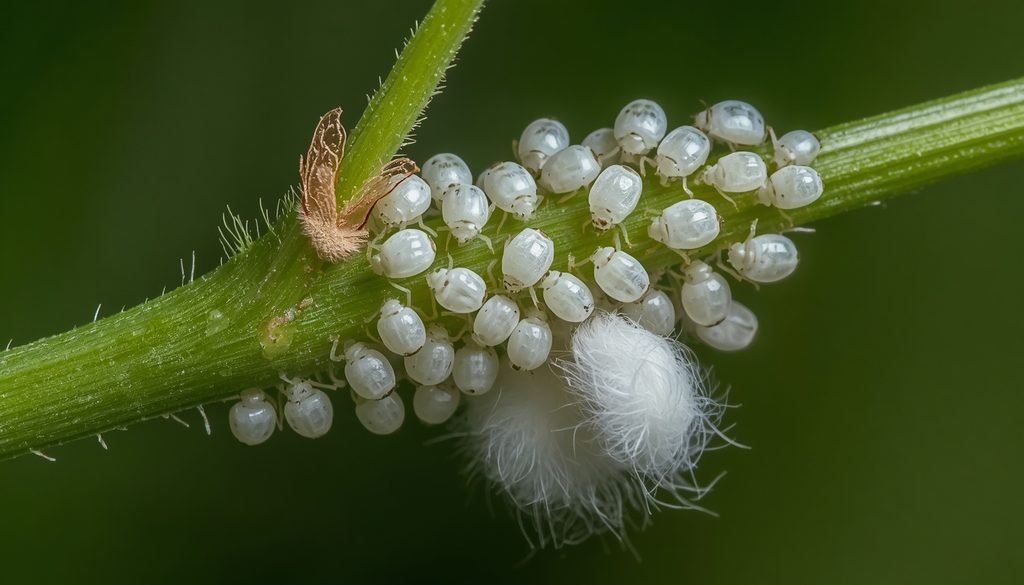
Several other pests can be mistaken for mealybugs, including woolly aphids, cottony cushion scale, soft scale, and whiteflies. All of these can produce wax or honeydew, so confirming the pest before treating saves wasted effort.
How to Confirm You Actually Have Mealybugs
Look closely at the white material. Mealybugs are actual insects with segmented, oval bodies under the wax, while scale insects sit under a harder, shell like cover and do not move once settled. A cotton swab or magnifying glass helps here. If gently touching the white mass reveals a soft insect body rather than a hard shell, mealybugs are the more likely culprit.
Mealybugs also favor specific hiding spots. Check leaf axils, the underside of leaves along the midrib, stem crevices, the crown of the plant near the soil line, and any point where two plant surfaces touch.
Why Mealybugs Are Difficult to Eliminate
Several biological traits make mealybugs harder to clear than many other houseplant pests.
Their waxy coating repels many contact sprays, especially on older nymphs and adults. Eggs hidden inside protective sacs are not exposed to most treatments at all. Crawlers can be present without being fully visible, and newly hatched insects can settle in fresh hiding spots within days. Because mealybugs favor protected areas such as leaf joints and the plant crown, a treatment that only covers exposed leaf surfaces will miss a portion of the colony every time.
This combination is why a single treatment, however thorough it seems, rarely ends an infestation on its own.
How to Get Rid of Mealybugs Step by Step
- Step 1: Isolate the infested plant.
Move it away from other plants immediately. Mealybugs do not fly and spread slowly on their own, so isolation limits the infestation to one plant while treatment is underway. - Step 2: Inspect the entire plant.
Check leaf axils, stem joints, the crown, the underside of leaves, and the soil line. Mealybugs cluster in protected spots more often than on open leaf surfaces. - Step 3: Remove visible mealybugs.
Wipe or pick off exposed insects and egg masses using a damp cloth or a cotton swab dipped in diluted isopropyl alcohol. A strong, direct stream of water can also dislodge exposed mealybugs on sturdy plants. - Step 4: Choose a direct treatment.
Insecticidal soap, horticultural oil, or neem oil applied directly to the insects are the most commonly supported options for aboveground infestations. Always spot test on a small area first and watch for leaf burn before treating the whole plant. - Step 5: Treat hidden areas.
Reapply the chosen treatment specifically to leaf joints, the crown, and stem crevices, not just the visible top growth, since this is where surviving insects usually persist. - Step 6: Repeat the treatment.
A single application will not reach every egg and crawler. Weekly treatment is a common approach until no new mealybugs appear over several inspections. - Step 7: Inspect nearby plants.
Check anything that was touching the infested plant or sitting close by. Mealybugs move slowly but do move, and pots, stakes, and tools can carry them. - Step 8: Monitor recovery.
Continue checking the plant every few days for several weeks after the last visible mealybug. New growth is a good sign, while continued yellowing or stunted growth may point to a heavier infestation than expected, or a root problem.
Treating root pests requires a complete understanding of how deep a plant’s root system extends into the soil. Deeply rooted plants like tomatoes need thorough soil drenching or repotting when root pests strike. If you want to understand how deep root systems actually spread and how to care for them, read this full guide on how deep do tomato roots grow.
Natural Treatment Methods Compared
“Natural” does not mean automatically safe for every plant, and no natural method offers a guaranteed one time cure. Each of the following works best as part of a repeated routine rather than a single application.
- Manual removal. Wiping or picking off mealybugs is genuinely effective on exposed insects and costs nothing, but it will not reach eggs tucked into crevices.
- Water spray. A firm stream of water can dislodge mealybugs from sturdy plants. It is gentle on the plant but needs to be repeated every few days to have a real effect on the population.
- Insecticidal soap. Works by breaking down the outer coating of soft bodied insects on direct contact. It is more effective on younger nymphs with less wax buildup. True insecticidal soap is formulated for this purpose and is not the same as ordinary household dish soap, which can be harsher on plant tissue.
- Horticultural oil. Suffocates insects on contact when coverage is thorough, including undersides of leaves. Oils can cause leaf burn on water stressed plants or in direct sun, so timing and testing matter.
- Neem oil. Can help suppress mealybugs, particularly younger stages, but it is not a guaranteed cure and works best as part of a repeated routine rather than a single fix.
- Isopropyl alcohol. Effective for spot treating individual mealybugs on houseplants, but requires care around concentration and plant sensitivity, covered in more detail below.
- Biological control. Outdoors, natural predators can be a long term solution. Covered in a later section.
Treatment Comparison Table
| Method | Best For | Main Limitation | Safety Note | Repeat Needed? |
| Manual removal | Small, visible infestations | Misses eggs and hidden insects | Low risk to plant | Yes, as part of ongoing checks |
| Water spray | Sturdy plants with exposed mealybugs | Will not reach hidden colonies | Very low risk | Yes, every few days |
| Isopropyl alcohol (spot) | Houseplants, direct contact on visible insects | Can burn leaves if too concentrated | Spot test first, avoid full plant soaking | Yes, weekly until clear |
| Insecticidal soap | Younger nymphs, direct contact | Needs to reach hidden spots to work | Test for phytotoxicity | Yes |
| Horticultural oil | Aboveground infestations with full coverage | Risk of leaf burn in heat or on stressed plants | Avoid applying in direct sun | Yes |
| Neem oil | Light to moderate infestations | Not a guaranteed cure | Test on small area first | Yes |
| Systemic insecticide | Ornamental plants with persistent infestations | Less reliable against mealybugs than other pests | Check label, avoid on edible or flowering plants near pollinators | Depends on product label |
| Biological control (outdoor) | Landscape and garden settings | Not practical indoors | Avoid broad spectrum sprays that kill natural enemies | Ongoing, not a one time fix |
Alcohol Treatment: How to Use It Safely
Isopropyl alcohol is one of the more commonly recommended spot treatments for houseplant mealybugs, but concentration and application method matter.
For small infestations, a dilute solution of isopropyl alcohol in water can be dabbed directly onto mealybugs with a cotton swab. For larger infestations, a more dilute spray solution can be applied, though this still requires spot testing first and repeated weekly applications until the infestation clears.
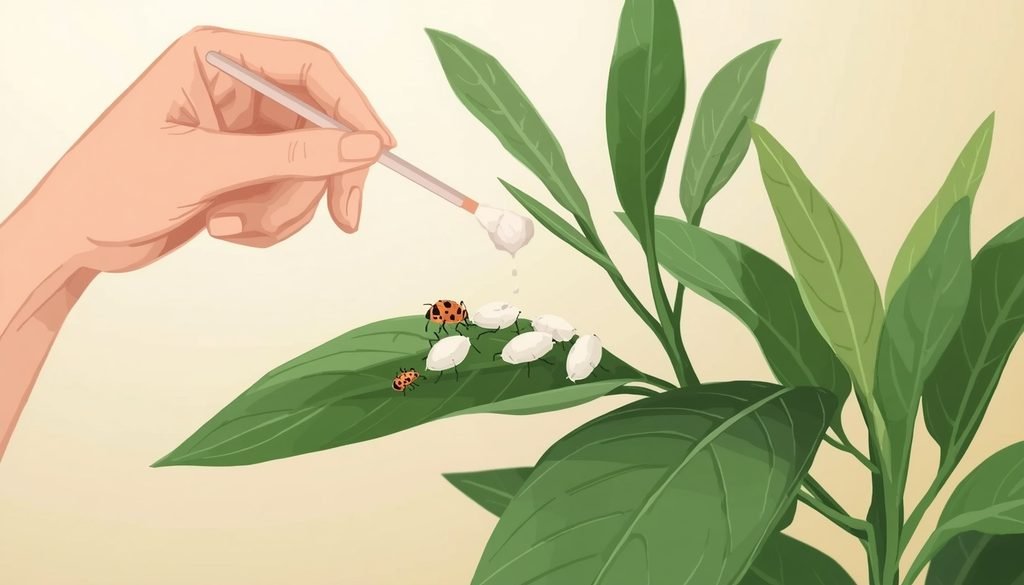
Always test the solution on a small, inconspicuous part of the plant one to two days before treating the whole plant, and watch for leaf burn. Some plants are more sensitive than others, and a concentration that is safe on one species can scorch another. Avoid soaking the entire plant or drenching the soil with alcohol solutions.
Indoor container plants require extra care during pest isolation and treatment because limited soil volume makes them more vulnerable. Growing healthy potted crops or ornamentals depends on selecting the right pot size, well-draining soil, and proper air circulation. For detailed tips on managing container plants successfully, learn how to grow tomatoes in pots.
Soapy Water and Insecticidal Soap
Soap can help control exposed mealybugs because it disrupts their outer coating on direct contact, but a few distinctions matter. Ordinary dish soap is not the same as a proper insecticidal soap product, and dish soap concentrations that seem mild can still stress certain plants over repeated use. Coverage is everything with soap treatments, since only insects the solution actually touches are affected, and it offers no residual protection once it dries. Treat it as one part of a repeated routine rather than a single fix.
Oils and Neem Based Products
Horticultural oil and neem oil both work primarily through direct contact and coverage rather than as a long lasting barrier. They tend to be more effective against younger nymphs, which have less wax buildup, than against mature, heavily coated adults. Applying oil in direct sun or on a water stressed plant increases the risk of leaf burn, so timing the application for cooler, cloudier conditions is a safer approach. Neither oil should be presented as a guaranteed single application cure.
Best Insecticide Options and Systemic Treatments
For persistent aboveground infestations, some gardeners turn to insecticides beyond soap and oil. Whether a systemic insecticide is appropriate depends on several factors: the plant type, whether the plant is edible, the specific product label, local regulations, and the potential impact on pollinators and beneficial insects.
Systemic products are generally considered less reliable against mealybugs than against many other piercing and sucking insects, largely because of the mealybugs’ waxy coating and hidden feeding habits. Broad spectrum insecticides can also eliminate the natural predators that would otherwise help keep mealybug populations down outdoors, which can make a long term problem worse rather than better.
Always follow the product label exactly, never use a product on an edible plant unless the label specifically permits it, and consider the effect on bees and other pollinators before applying anything to flowering plants.
Contact vs Systemic Treatments
Contact treatments, including alcohol, soap, and oils, only affect the insects they physically touch, which means thorough coverage of hidden areas is essential. Systemic treatments are absorbed into the plant and can reach insects feeding on tissue the spray cannot reach, but they take time to act, depend heavily on the specific active ingredient and plant type, and are generally less consistent against mealybugs than against many other pests.
How to Get Rid of Mealybugs in Soil
Root mealybugs are a distinct and often overlooked category. Unlike aboveground mealybugs, they live below the soil line and feed on roots, which makes them far harder to detect and treat.
Possible signs of root mealybugs include a plant that continues to decline despite normal watering and light, stunted growth with no visible aboveground pest, or a fine white, waxy residue noticed when the plant is repotted or the root ball is disturbed. Because they are hidden, root mealybugs are often not identified until a struggling plant is removed from its pot.
Surface treatments aimed at foliage will not reach root mealybugs at all, which is a common reason a plant keeps declining even after aboveground mealybugs appear controlled. If root mealybugs are suspected, gently remove the plant from its container and inspect the root ball. Badly affected roots can sometimes be rinsed and the plant repotted into fresh, pest free soil, but in cases of severe root damage, discarding the plant may be the more practical option rather than repeatedly treating a plant that continues to decline.
Not every struggling plant has root mealybugs, and this diagnosis should follow an actual inspection of the roots rather than an assumption.
How to Get Rid of Mealybugs on Outdoor Plants
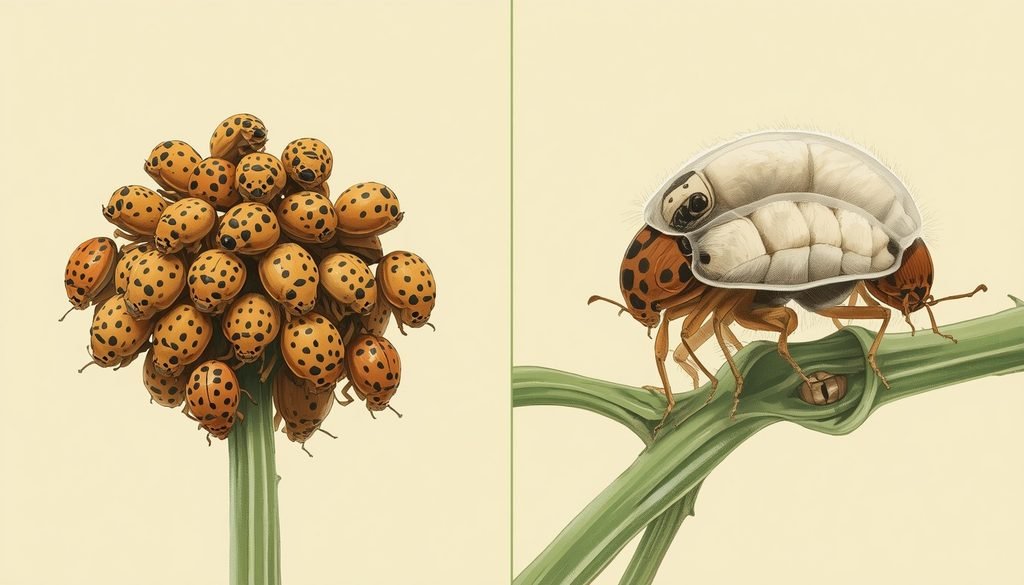
Outdoor infestations differ from houseplant infestations in several important ways. Natural predators such as lady beetles, lacewings, and parasitic wasps are often present outdoors and can keep mealybug populations below damaging levels without any spraying at all. Because of this, cultural practices and biological control are usually sufficient outdoors, and broad spectrum insecticide use can do more harm than good by wiping out those same natural enemies.
For outdoor plants, a strong, direct stream of water repeated every few days can knock down exposed populations on sturdy shrubs. Pruning out heavily infested branches is also a practical option outdoors that is less commonly used on houseplants. Avoid overapplying nitrogen fertilizer on plants with a mealybug history, since excess nitrogen combined with regular irrigation encourages the tender new growth mealybugs prefer for laying eggs.
If a heavily infested plant deteriorates beyond recovery, starting fresh from healthy store-bought fruits or saved seeds is a practical option. You can easily propagate strong new seedlings right from your kitchen vegetables with basic moisture and light control. Check out this beginner-friendly step-by-step method on how to grow tomatoes from tomato.
How to Get Rid of Mealybugs on Hibiscus Naturally
Hibiscus is a commonly infested ornamental, and mealybugs on hibiscus tend to favor the same protected spots seen on other plants: leaf undersides, stems, flower buds, and branch joints where new growth emerges.
Start by isolating an infested container hibiscus if it sits near other plants. Inspect buds and new growth closely, since mealybugs are drawn to tender tissue. Hand removal followed by insecticidal soap or horticultural oil, applied with attention to bud clusters and branch joints, is a reasonable natural approach, repeated weekly. Outdoors, avoid unnecessary broad spectrum sprays so that natural predators can help keep populations in check between treatments. Not every hibiscus infestation involves the same mealybug species, so persistent or unusual symptoms may be worth a closer look before assuming the standard approach will work.
Why Mealybugs Keep Coming Back
Reinfestation is common enough that it deserves its own explanation. Frequent causes include:
- Only the visible insects were treated, while eggs or crawlers in hidden spots survived
- Treatment was applied once and not repeated on a consistent schedule
- Nearby plants were never inspected and carried a low level infestation back to the treated plant
- The plant was returned to its normal location before the infestation was fully cleared
- A colony was missed in a hard to see spot such as the crown or a leaf axil
- A root mealybug infestation was overlooked while aboveground symptoms were treated
- Outdoors, ants protected mealybug colonies from natural predators
- A newly acquired plant introduced a fresh infestation nearby
Ants and Mealybugs
Ants are drawn to the sweet honeydew mealybugs excrete, and in exchange, ants often protect mealybug colonies from predators such as lady beetles and parasitic wasps. This relationship is well documented outdoors, where ant activity can noticeably interfere with natural biological control. Controlling ants around an infested plant, through baiting or physically blocking their access, can make other treatments and natural predators more effective. Ants are drawn to mealybugs because of honeydew, rather than being a cause of the infestation itself.
What Causes Mealybugs
Mealybugs are introduced to a home or garden rather than appearing spontaneously. Common sources include a newly purchased plant that was already infested, contact with an infested plant nearby, insects carried on pots, tools, or stakes, and movement between plants that are touching or placed close together.
Certain conditions can favor an infestation once mealybugs are present, including warm temperatures, indoor environments without natural predators, and excess tender new growth encouraged by heavy nitrogen fertilization. These conditions make an infestation more likely to spread or persist, but they are not the reason mealybugs appear on a plant that was never exposed to them in the first place.
How to Prevent Future Infestations
- Inspect any new plant thoroughly, including leaf joints and the crown, before bringing it near other plants
- Quarantine new plants for one to two weeks before placing them with the rest of a collection
- Check plants regularly rather than waiting for a visible problem
- Avoid overapplying nitrogen fertilizer, which encourages the soft new growth mealybugs prefer
- Keep ants away from mealybug prone plants outdoors
- Discard a “grandmother” plant with a long history of repeated infestations if it keeps reinfecting others
- Avoid unnecessary broad spectrum insecticide use outdoors so natural predators can do their job
When dealing with severe root mealybug infestations, removing the damaged soil and transferring the plant to a fresh container is often the best solution. Proper repotting techniques ensure the roots adapt quickly without suffering severe transplant shock. To learn the exact step-by-step process for safe shifting, check out how to repot a plant.
Common Treatment Mistakes
- Treating only the mealybugs that are clearly visible and stopping there
- Applying a treatment once and assuming the problem is solved
- Skipping leaf joints, the crown, and stem crevices during treatment
- Failing to isolate the infested plant from others nearby
- Using household chemicals on a plant without checking for phytotoxicity first
- Spraying alcohol across an entire plant without a small area test
- Assuming vinegar is a safe, reliable fix
- Reaching for a strong systemic insecticide before trying gentler, targeted methods
- Overlooking root mealybugs on a plant that keeps declining
- Returning a plant to its normal spot before the infestation is confirmed clear
Recovery and Monitoring Timeline
Recovery is gradual rather than immediate. In general, expect to continue weekly treatments for several weeks, since eggs continue hatching even after visible adults are removed. New, healthy growth without fresh mealybug activity is a good sign the plant is recovering. Continue checking every few days for at least a few weeks after the last mealybug sighting before considering the infestation resolved, since exact timing depends on the plant, the treatment used, and how established the colony was.
What Kills Mealybugs Instantly?
No treatment offers guaranteed instant elimination of an entire infestation, and it helps to separate two different questions. Killing a visible, exposed mealybug on contact is realistic with isopropyl alcohol, insecticidal soap, or horticultural oil applied directly to the insect. Eliminating an infestation is a different matter, since hidden eggs, crawlers, and unseen colonies can survive that same treatment and allow the population to rebound. Direct contact treatments kill what they touch, not what they miss, which is why repeated, thorough applications matter more than the specific product chosen.
Can Vinegar Kill Mealybugs?
Vinegar is frequently mentioned online as a home remedy, but the supporting evidence is weak and largely anecdotal. The reasoning behind it is that acetic acid can break down the mealybug’s waxy coating, yet a concentration strong enough to do that reliably is also strong enough to damage plant tissue, causing leaf burn or scorching. A dilution mild enough to be safe for the plant is often too weak to meaningfully affect the mealybugs. Because a treatment that damages the plant is not a good pest control strategy, safer, better supported options such as insecticidal soap, horticultural oil, or diluted isopropyl alcohol are generally a more reliable choice than vinegar.
Does Soapy Water Kill Mealybugs?
Soapy water can help against exposed mealybugs, since the soap disrupts their protective coating on direct contact. It is not a one time cure, coverage of hidden insects is essential, and plant sensitivity varies. A proper insecticidal soap product is a more predictable choice than an improvised mix of household dish soap and water, which can be harsher on some plant tissue.
Frequently Asked Questions
What kills mealybugs instantly?
Isopropyl alcohol, insecticidal soap, and horticultural oil can kill an exposed mealybug on direct contact. None of them guarantee instant elimination of a full infestation, since hidden eggs and crawlers often survive the first treatment and require repeated applications.
Can vinegar kill mealybugs?
The evidence for vinegar as a mealybug treatment is weak and largely anecdotal. A concentration strong enough to affect the waxy coating typically risks burning plant tissue, so safer, better supported treatments are generally recommended instead.
What causes mealy bugs?
Mealybugs are introduced through infested plants, contact with nearby infested plants, or insects carried on pots and tools. Warm conditions and excess tender new growth can favor an infestation once mealybugs are present, but they do not create mealybugs from nothing.
Does soapy water kill mealybugs?
Soapy water can kill exposed mealybugs on direct contact by disrupting their outer coating. It requires thorough coverage and repeat applications, and true insecticidal soap tends to be gentler on plants than improvised dish soap mixes.
How often should mealybug treatments be repeated?
Weekly treatment is a common approach until no new mealybugs appear across several inspections. The exact interval depends on the product used, the plant, and how established the infestation was, so following the specific product’s guidance is important.
How long does it take to fully get rid of mealybugs?
Recovery generally takes several weeks of consistent treatment because eggs continue hatching after adults are removed. A plant is usually considered clear only after multiple inspections show no new activity, not after a single treatment.
Can a mealybug infestation come back after treatment looks successful?
Yes. Reinfestation is common when eggs or crawlers survive the initial treatment, a nearby plant was not inspected, or the plant was returned to its usual spot too soon. Continued monitoring after treatment matters as much as the treatment itself.
Should a heavily infested plant be thrown away?
In cases of severe, repeated infestation, particularly with root mealybugs or a plant that continues to decline despite treatment, discarding the plant is sometimes more practical than continuing to treat it indefinitely.
Do mealybugs spread quickly to other plants?
Mealybugs cannot fly and move slowly on their own, so they do not spread rapidly through a room or garden by themselves. They do spread through contact between touching plants, shared pots, tools, or new plants brought in already infested.
Are natural predators effective against mealybugs outdoors?
Yes. Lady beetles, lacewings, and parasitic wasps are natural predators of mealybugs and often keep outdoor populations below damaging levels on their own. Avoiding broad spectrum insecticides helps protect these natural enemies.
Final Takeaway
Getting rid of mealybugs is less about finding one perfect product and more about consistency. Isolating the plant, treating hidden areas thoroughly, repeating the treatment on a schedule, and checking nearby plants addresses the actual reasons infestations return. Indoor and outdoor plants call for slightly different approaches, and a plant that keeps declining despite aboveground treatment is worth checking for root mealybugs before assuming the treatment has failed.
Starting your garden from clean seeds reduces the risk of introducing unwanted pests like mealybugs through purchased nursery plants. Properly extracting, fermenting, and planting seed batches ensures high germination rates and healthier pest-free growth. Learn the complete seed-starting process by visiting planting tomato seeds from tomatoes.
Properly identifying leaf issues early is key to keeping your plants healthy and stress-free throughout the season. Beyond mealybug damage, physical stress or weather factors can also cause foliage to distort and roll up. If you notice strange leaf shapes or upward rolling on your plants, check out this guide on why are my tomato leaves curling to diagnose and fix the issue quickly.

One Comment