Why Are My Tomato Leaves Curling: Causes, Symptoms & Fixes
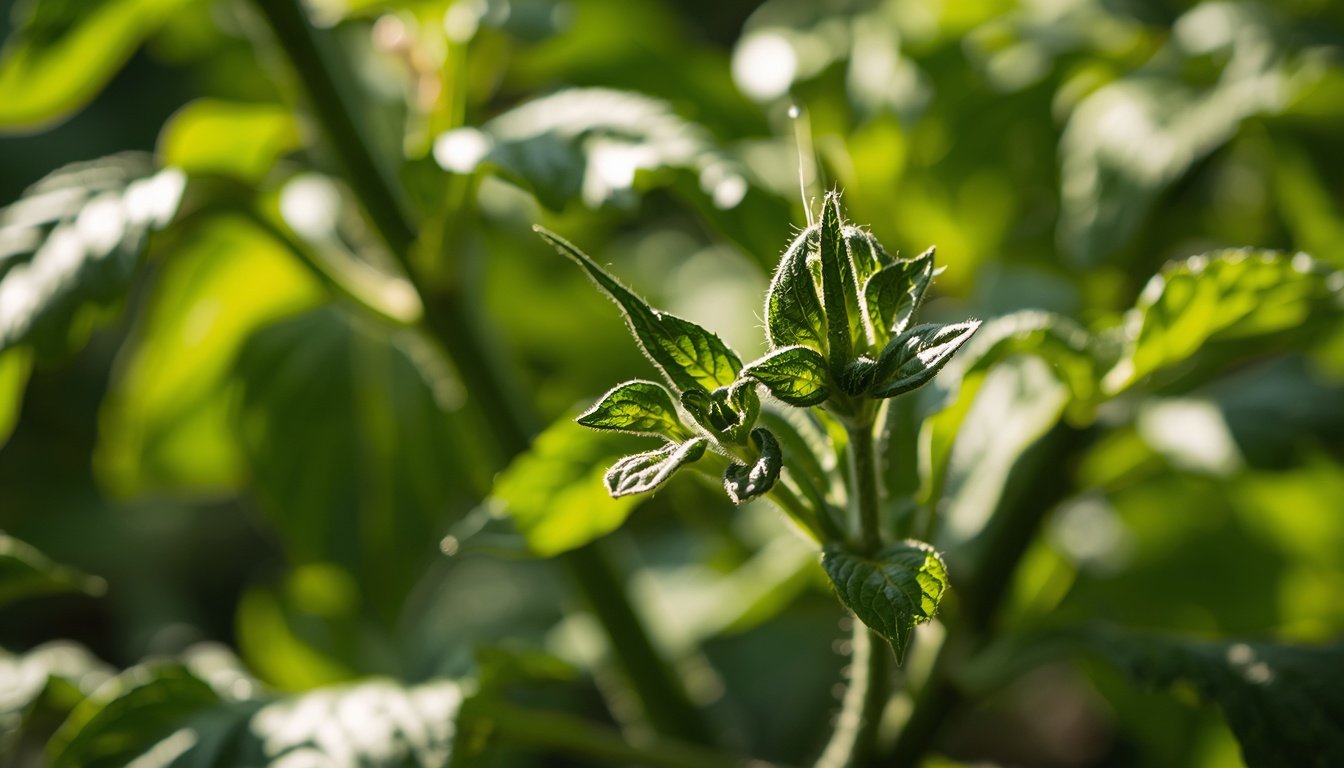
Discovering twisted or rolling foliage on your garden plants can be frustrating, but understanding why are my tomato leaves curling is the first step to saving your harvest. Whether the edges are cupping upward from heat stress or yellowing due to a pest issue, leaf curling is simply your plant’s way of communicating. By checking a few basic environmental factors, you can quickly identify the root cause and restore healthy growth.
Tomato leaves curl for many reasons, including heat and water stress, transplant shock, heavy pruning, too much nitrogen, herbicide exposure, aphids or mites, and viral disease. Older leaves curling upward while staying green is usually harmless physiological leaf roll. New growth that is twisted, distorted, or yellowing needs closer attention.
The Fastest Way to Identify the Cause
Before treating anything, check these six things:
- Which leaves are curling?
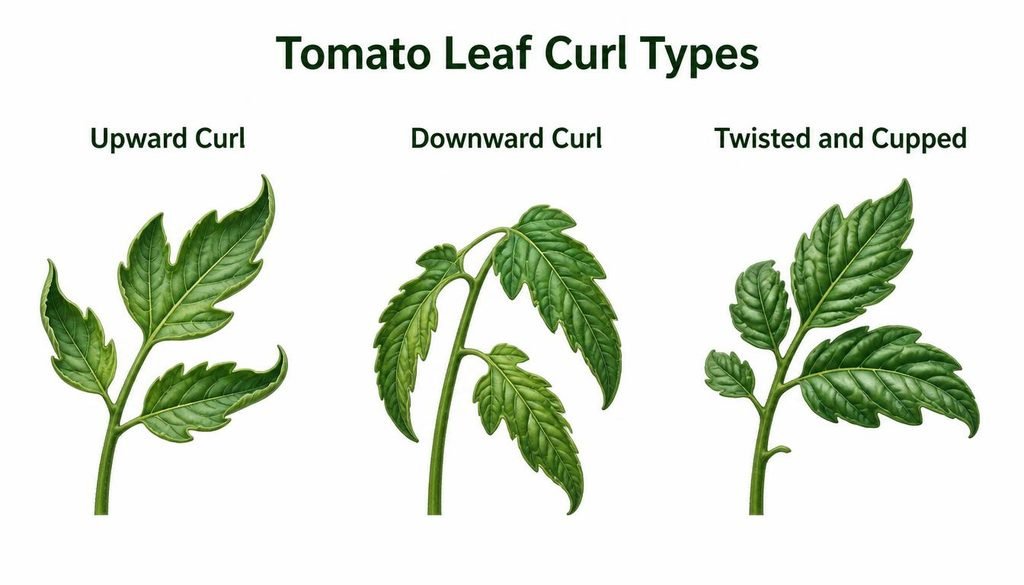
Older, lower leaves point toward stress or physiological leaf roll. New growth at the top points toward herbicide injury, virus, or sucking insects. - Which direction is the curl?
Upward rolling is typically stress-related. Downward curling, twisting, or strap-shaped leaves point toward herbicide exposure. - What color are the leaves?
Solid green with no spotting is a good sign. Yellowing veins, mosaic patterns, or bronzing suggest a more specific cause. - What is the texture?
Firm and slightly leathery is common with physiological leaf roll. Brittle, thickened, or crinkled tissue suggests herbicide injury. - Are stems distorted?
Twisted, bent, or thickened stems point strongly toward herbicide exposure or virus, not simple watering stress. - What happened recently?
Heat waves, missed watering, transplanting, heavy pruning, fertilizing, or nearby spraying are all relevant clues.
| Symptom | Likely Cause | What to Check | What to Do |
| Older leaves roll upward, stay green | Physiological leaf roll | Recent heat, pruning, or watering swings | Usually nothing; monitor |
| Leaves curl during or after heat | Heat and water stress | Soil moisture a few inches down | Water deeply, add mulch |
| New growth twisted, strap-shaped | Herbicide drift | Recent spraying nearby, lawn treatments | Stop suspected exposure source, monitor new growth |
| Curling with yellow veins, stunting | Possible virus (TYLCV) | Whiteflies on leaf undersides | Confirm with local extension, consider removal |
| New shoots sticky, distorted | Aphids | Insects and residue on undersides | Rinse with water, insecticidal soap if needed |
| Fine stippling, webbing | Spider mites | Leaf undersides in bright light | Increase humidity, insecticidal soap or miticide |
| Curling with wilting despite wet soil | Overwatering or root stress | Drainage, root color and smell | Improve drainage, let soil dry between waterings |
Common Causes of Tomato Leaves Curling
1. Physiological Leaf Roll
This is the most common and least serious cause. Older, lower leaves roll upward, sometimes tightly enough to enclose the leaflet, while staying green and firm. According to Clemson Cooperative Extension, excessive moisture and nitrogen, insufficient phosphorus, heat, drought, severe pruning, root disturbance, and transplant shock can all trigger this response. It does not indicate disease, and in most cases fruiting continues normally. No treatment is required beyond consistent watering going forward.
2. Heat and Water Stress
Hot, dry conditions cause tomato plants to curl their leaves inward to reduce moisture loss through the leaf surface, a protective response documented by university extension programs including Utah State University Extension. Both drought and inconsistent watering (alternating dry and soggy soil) can trigger curling. Checking soil moisture a few inches below the surface is the fastest way to confirm this cause.
3. Overwatering or Poor Drainage
Waterlogged soil starves roots of oxygen, and stressed roots can produce the same curling response as drought stress, along with slower growth and, in more severe cases, wilting even though the soil is wet. Leaf curl by itself does not confirm overwatering. Check drainage and root condition before assuming this is the cause.
4. Root Damage or Transplant Shock
Recent transplanting, tilling near the root zone, or hoeing too close to the stem can disturb roots enough to trigger leaf curling as the plant redirects energy toward recovery. This typically affects the whole plant rather than a single section and improves as new roots establish. If you are growing in containers, ensure you understand how deep do tomato roots grow so that container restrictions do not cause root suffocation.
5. Too Much Nitrogen
Excess nitrogen encourages fast, soft leaf growth that can curl and become more vulnerable to pest damage, and it is listed among the cultural factors linked to physiological leaf roll by Clemson HGIC. Reducing high-nitrogen fertilizer applications, particularly during fruiting, can help.
6. Heavy Pruning or Rapid Growth
Removing a large amount of foliage at once, or a sudden growth spurt after favorable weather, can stress a plant enough to cause temporary curling in the remaining leaves. This usually resolves as the plant adjusts.
7. Herbicide Injury
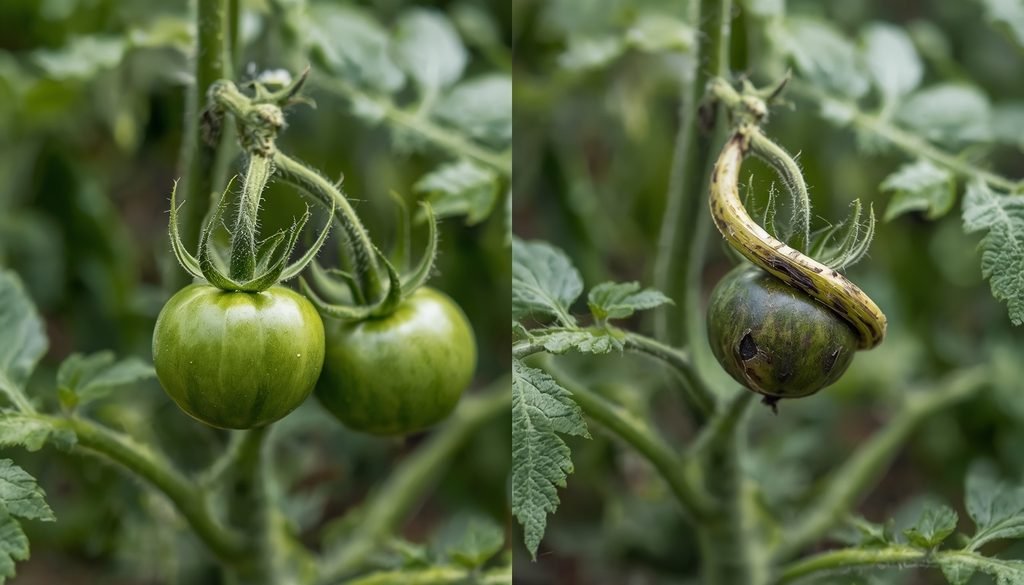
Tomatoes are highly sensitive to growth regulator herbicides such as 2,4-D and dicamba, according to research summarized by the University of Florida and confirmed by extension services including Mississippi State University Extension and South Dakota State University Extension. Exposure, even at very low concentrations from spray drift or vapor, can cause leaf cupping, twisting, strap-shaped leaves, brittle stems, and later fruit deformities sometimes called cat-facing. This is covered in more detail below.
8. Aphids and Other Sap-Feeding Pests
Aphids cluster on new growth and undersides of leaves, feeding on plant sap and causing curling, cupping, or twisting, often along with a sticky residue called honeydew. Spider mites cause fine stippling, bronzing, and sometimes visible webbing, usually worsening in hot, dry conditions.
9. Viral Diseases
Certain viruses, most notably Tomato Yellow Leaf Curl Virus (TYLCV) in warmer growing regions, cause upward curling, yellowing leaf margins, and stunted growth, and are spread primarily by the silverleaf whitefly. Viral disease is discussed in its own section below.
How to Fix Curling Tomato Leaves
- Check soil moisture: Push a finger a few inches into the soil near the root zone before assuming a watering problem.
- Check drainage and roots if the soil feels consistently wet: Poor drainage can mimic drought stress.
- Consider recent weather: Extreme heat commonly causes short-term curling that improves once temperatures drop.
- Inspect new growth and leaf undersides: Search for insects, sticky residue, or webbing.
- Review recent fertilizer use: Pay special attention to high-nitrogen products.
- Look for signs of herbicide exposure: Check nearby lawn treatments, spraying, or contaminated mulch or compost.
- Watch for disease symptoms: Look for yellowing veins, mosaic patterns, or stunted new growth.
- Correct the underlying cause rather than the curl itself: Curled leaves often do not flatten back out; new growth is the better indicator that the plant is recovering.
What Do Overwatered Tomato Plants Look Like?
Overwatered tomato plants may show curling, yellowing lower leaves, wilting despite moist soil, slowed growth, and in advanced cases, root rot with a sour smell and discolored roots. Standing water or consistently soggy soil around the base is a strong indicator.
Curling alone is not enough to diagnose overwatering; it needs to appear alongside these other signs, particularly soggy soil and poor drainage. If you suspect container issues, review our guide on how to grow tomatoes in pots to optimize container drainage and pot sizing.
Tomato Leaves Curling and Turning Yellow
Yellowing combined with curling can point toward several different causes, which is why the pattern matters:
- Yellowing on older, lower leaves alongside curling often reflects nutrient stress or the natural aging of lower foliage as the plant directs resources upward.
- Yellowing that follows the leaf veins, especially on new growth, combined with curling and stunted growth, is more consistent with viral disease and warrants closer inspection for whiteflies.
- Uniform yellowing across the plant with curling and wilting can point toward root stress from overwatering or root disease.
Why Are My Tomato Leaves Curling and Turning Brown?
Brown, scorched leaf edges combined with curling frequently follow drought or heat stress, since the plant is losing moisture faster than roots can replace it. Brown spots or lesions rather than uniform browning suggest a fungal or bacterial disease unrelated to simple curling and should be evaluated separately. Herbicide injury can also produce brown streaking on stems alongside curling.
Because several unrelated problems can produce brown, curled leaves, it is worth confirming with at least one other symptom, such as soil moisture, insect presence, or stem discoloration, before deciding on a cause.
Why Are New Tomato Leaves Curling?
New growth deserves closer attention than older leaves because it reflects what is happening to the plant right now rather than lingering stress from weeks ago:
- Twisted, narrow, or strap-shaped new leaves point strongly toward herbicide exposure.
- Sticky, distorted new growth with visible insects points toward aphids.
- Yellow, mottled, or curled new leaves with stunted growth point toward possible viral infection, especially in regions where TYLCV is present.
- New growth curling upward with no discoloration and no distortion, appearing shortly after a heat wave or a watering lapse, is more likely simple environmental stress.
Tomato Leaf Curl Virus: What to Look For
Tomato Yellow Leaf Curl Virus is associated with upward cupping of leaves, yellowing along leaf margins or between veins, smaller than normal leaflets, stunted plant growth, and reduced flowering or fruit set. It is primarily spread by the silverleaf whitefly, so checking leaf undersides for these small, white flying insects is a useful next step.
Viral disease cannot be corrected by adjusting watering or fertilizer, and there is no cure once a plant is infected. Local extension offices can help confirm a diagnosis, and in cases of confirmed viral infection, removing affected plants is often recommended to limit spread to healthy plants nearby.
Could Herbicide Drift Be Causing the Curling?
If the newest growth is twisted, cupped, strap-shaped, or growing in an unusual spiral pattern (a symptom called epinasty), herbicide drift is worth investigating closely. Growth regulator herbicides such as 2,4-D and dicamba are commonly used on lawns and agricultural fields, and tomatoes are especially sensitive to them, sometimes showing symptoms from concentrations far below the labeled application rate, according to South Dakota State University Extension.
Symptoms typically appear on growth that emerged after exposure, while older leaves may remain unaffected. Stems can become brittle, thickened, or twisted, and fruit that develops after exposure may be misshapen. If drift is suspected, identify and address the source, avoid consuming fruit from heavily affected plants that were not intended for herbicide-treated areas, and monitor whether new growth after the exposure period looks normal again.
Diagnostic Decision Tree
- Older leaves curl upward, stay green: Likely physiological leaf roll or general environmental stress.
- New leaves are twisted or severely distorted: Investigate herbicide exposure, pests, or virus.
- Curling appears with yellowing: Check watering consistency, roots, and insect presence.
- Curling appears after extreme heat: Likely heat and water stress.
- Curling appears with mosaic patterns or severe stunting: Investigate viral disease and check for whiteflies.
This decision tree is a starting point for diagnosis, not a substitute for a local extension office or plant pathology lab if symptoms are severe or spreading.
Common Mistakes When Treating Tomato Leaf Curl
- Assuming every curled leaf means overwatering without inspecting the soil first.
- Watering more without checking actual soil moisture levels.
- Adding fertilizer immediately without identifying the true underlying cause.
- Reaching for pesticides before confirming that harmful pests are actually present.
- Ignoring distorted new growth, which is often the most informative symptom.
- Overlooking possible herbicide exposure from nearby lawns, fields, or contaminated compost.
- Treating viral symptoms as if they were a simple nutrient deficiency.
- Removing curled leaves unnecessarily when the plant is otherwise healthy and producing.
- Overreacting to mild, temporary physiological leaf roll caused by routine weather swings.
Recovery Timeline
Leaves already curled from heat or water stress generally do not flatten back out, but new growth typically looks normal once soil moisture and temperature stabilize. Mild herbicide exposure may allow a plant to outgrow the damage over several weeks, though yield can still be affected; heavier exposure can cause longer-lasting distortion. Viral infections do not resolve, and affected plants will not return to normal growth. In all cases, new growth is the most reliable sign of whether the underlying problem has been addressed.
Why Are My Tomato Leaves Curling?
If root stress occurred due to improper container management, refer to our step-by-step instructions on how to repot a plant to re-establish root stability without triggering extra transplant shock.
How to Prevent Tomato Leaf Curl
- Water deeply and consistently rather than in small, frequent amounts.
- Improve drainage in heavy or compacted soil.
- Apply balanced fertilizer rather than high-nitrogen products, especially during fruiting.
- Prune moderately and avoid removing large amounts of foliage at once.
- Mulch to stabilize soil moisture and reduce soil temperature swings.
- Protect roots from disturbance when weeding, tilling, or transplanting. If you start your plants from scratch, follow proper seed extraction methods outlined in planting tomato seeds from tomatoes to ensure initial seedling vigor.
- Monitor regularly for aphids, mites, and whiteflies.
- Avoid herbicide use near tomato beds and be cautious with mulch or compost sourced from treated areas.
- Harden off transplants gradually to reduce initial transplant shock.
- Choose disease-resistant tomato varieties where TYLCV or other viruses are a known local risk.
Frequently Asked Questions
How do you fix leaf curl on tomato plants?
Identify the underlying cause first, since curl itself is a symptom rather than a problem to treat directly. Correct soil moisture, address pests if present, remove herbicide exposure sources, and monitor new growth to confirm recovery.
What do overwatered tomato plants look like?
Overwatered plants often show curling, yellowing lower leaves, wilting despite wet soil, slowed growth, and in severe cases, root rot with darkened, smelly roots. Consistently soggy soil is a key sign.
Can overwatering cause tomato leaves to curl?
Yes, excess moisture can stress roots enough to cause curling, though it should be confirmed with other signs like soggy soil and poor drainage rather than assumed from curling alone.
How do you fix curling leaves on plants?
Match the fix to the cause: consistent watering for moisture stress, improved drainage for overwatering, pest treatment for insects, and removing the exposure source for herbicide injury. Treating the wrong cause rarely resolves the curling.
Is tomato leaf curl always a sign of disease?
No. Physiological leaf roll from heat, watering swings, or pruning is common and harmless. Disease is more likely when curling appears alongside yellowing veins, mosaic patterns, or stunted growth.
Can tomato leaves recover after curling?
Individual curled leaves usually do not flatten back out, but the plant as a whole can recover once the cause is addressed, which shows up as healthy normal new growth.
Why are my new tomato leaves curling but the old ones look fine?
New growth reacting while older leaves stay normal points toward something recent, such as herbicide exposure, an early pest infestation, or viral infection, rather than long-term environmental stress.
Does heat cause tomato leaves to curl?
Yes. High temperatures cause leaves to curl inward as a protective way to reduce water loss, and this is one of the most common and least serious causes of tomato leaf curl.
Should I remove tomato leaves that are curling?
Not unless they are diseased, dead, or clearly damaged beyond recovery. Removing healthy curled leaves unnecessarily can reduce the ability of the plant to photosynthesize.
When should I be concerned about curling tomato leaves?
Be more concerned when curling appears with yellowing veins, mosaic patterns, stunted growth, sticky residue, visible insects, or twisted stems, rather than simple upward curling of older leaves with no other symptoms.
Final Thoughts
Curling leaves on your tomato plants can look alarming, but in most home gardens, it is simply the plant’s natural way of reacting to environmental changes like a hot afternoon or a slight shift in watering routines. By taking a systematic approach and checking leaf patterns, new growth, and recent garden changes before taking action, you can easily protect your harvest without over-treating your plants.
If you are also growing other potted plants or managing a wider variety of home greens alongside your vegetable garden, maintaining optimal growing conditions across all your setups makes troubleshooting much easier. For more detailed instructions on keeping your home greenery healthy year-round, check out our comprehensive indoor plant care guide to balance light, moisture, and overall plant resilience.