Can Spider Plants Live Outside? Sun, Cold & Care Tips 2026
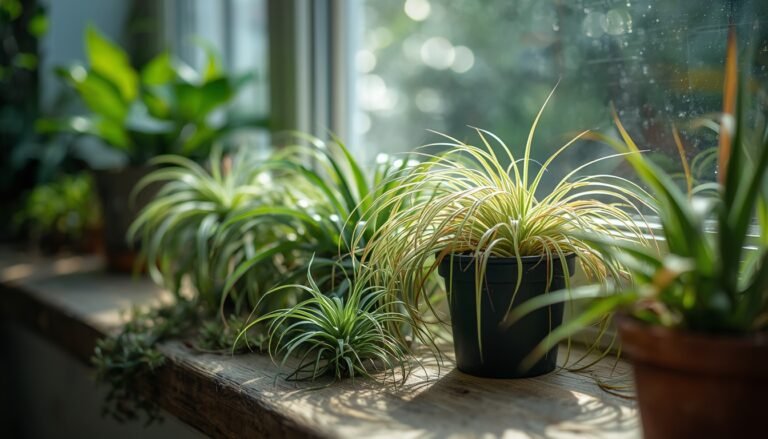
Can spider plants live outside? Yes, and many of them enjoy a summer on the patio. The trouble starts when a plant that has spent months behind a window meets real sunshine, a cold night, or a week of rain. Those three things cause most outdoor failures, and all of them are easy to plan around once you know the limits. This guide explains what a spider plant can tolerate, how to move one outdoors safely, and exactly when to bring it back in.
Yes, spider plants can live outside in suitable conditions. Bright indirect light or shade is much safer than harsh direct sun. Because frost is the primary danger, your local climate determines if they stay outdoors year-round or only during summer.
Outdoor Spider Plant Problems at a Glance
| Outdoor Problem | Likely Cause | What To Do |
|---|---|---|
|
☀️ Sunburn Pale, bleached, or papery patches; crisp brown edges |
Sunburn from direct or afternoon sun, worse on variegated leaves | Move to shade immediately, trim badly scorched leaves, restart acclimation |
|
🍂 Brown Tips Brown leaf tips only |
Fluoride and salts in tap water, dry air, or uneven watering | Switch to rainwater or filtered water, water evenly, shelter from hot wind |
|
🟡 Yellow Leaves Yellow leaves |
Too little light, waterlogged soil, or harsh sun | Check drainage, empty saucers, adjust the position |
|
💧 Thirst / Heat Drooping, pale, dull leaves |
Thirst (outdoor pots dry fast) or heat stress | Water thoroughly, add afternoon shade |
|
❄️ Cold Damage Limp, water soaked leaves that turn dark after a cold night |
Cold or frost damage | Move indoors, stop feeding, trim damage once it stops spreading |
|
⚠️ Root Rot Mushy base, sour smell, collapsing leaves |
Root rot from saturated soil | Unpot, remove soft roots, repot in fresh, free draining mix |
|
🐛 Pests Sticky leaves, fine webbing, cottony clusters, or small bumps |
Aphids, spider mites, mealybugs, or scale | Wash off, treat, and isolate the plant |
Can Spider Plants Live Outside?
Yes. A spider plant (Chlorophytum comosum) is native to tropical West Africa and stretches of eastern and southern Africa, so warmth is not the issue. Cold is. Give it soft light, drained soil, and protection from frost, and summer outdoors suits it well.
Your climate decides which of three situations you are in:
- Frost free climates:
Gardening Know How describes it as a perennial in zones 9 to 11 and states that it cannot tolerate any frost. - Cool climates with warm summers:
University of Wisconsin Extension notes that it can be grown outdoors as an annual in cool climates. In practice, that means a potted summer visitor. - Borderline places with mild but occasionally frosty winters:
Treat it as a summer plant unless you can guarantee protection on every cold night.
When Is It Safe to Move a Spider Plant Outdoors?
Wait until the last frost has passed and nights are reliably mild. Sources give slightly different numbers, which is worth knowing. The Royal Horticultural Society advises growing it in a frost free environment, ideally above 10°C (50°F). North Carolina State Extension advises keeping temperatures above 45°F (7°C). Plant Addicts, a nursery, recommends moving plants out once temperatures are above 60°F (16°C).
A practical way to use those figures: treat 10°C (50°F) at night as the bare minimum, and wait for nights closer to 15°C (60°F) if the plant has lived indoors all winter. Also avoid moving it out just before a cool, wet spell in the forecast.
How Much Sun Can a Spider Plant Handle Outside?
Less than most people expect. Missouri Botanical Garden warns that the foliage scalds in direct sun. The RHS adds that variegated plants are especially prone to leaf scorch.
The reason is simple. Leaves grown behind glass are adapted to weaker light. Outdoor light is far more intense, even in the shade of a porch, so a sudden move can bleach or burn tissue that cannot repair itself.
| Light Condition | How the Plant Usually Responds | Verdict |
|---|---|---|
| Deep shade | Survives, but growth slows and variegation may fade | Safe, but plain |
| Bright shade or dappled light | Steady growth and good leaf color | ⭐ Best choice |
| Gentle morning sun (for a few hours) | Usually fine once acclimated | 👍 Good |
| Midday and afternoon sun | Scorch, bleaching, brown edges | 🚫 Avoid |
| Full sun all day | Heavy burn and rapid drying | ⛔ Avoid |
Simple Placement Rule
Keep your plant in bright shade all day, with at most soft morning sun. If direct sun reaches the leaves after late morning, move the plant immediately.
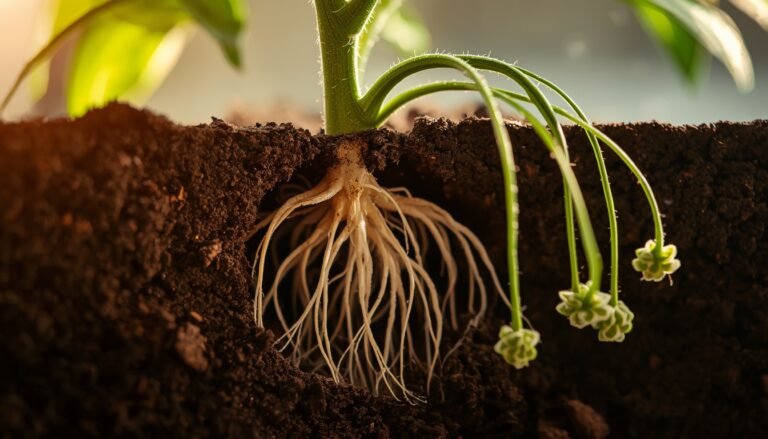
Waterlogged pots after heavy rain can lead to mushy roots and a sour smell. Our article on snake plant root rot shows how to spot soft roots and cut them away, and the same basic steps apply to a spider plant with rotting roots.
Can Spider Plants Live Outside in Full Sun?
Generally no. Full sun scorches the leaves, dries the pot quickly, and usually leaves brown, papery damage. Wisconsin Extension says outdoor plants need bright light but can sunburn in full sun. Cooler, cloudier climates give more margin, and green leaved plants tolerate more than variegated ones, but shade is still the safer default.
Can Spider Plants Stay Outside All Summer?
Yes, in most regions, provided the spot stays shaded and the pot does not dry out or overheat. Small pots heat and cool faster than garden soil, and dark plastic in sun can warm the roots. Lighter colored pots and shade around the container help.
Hot, dry weather is the other stress. Missouri Botanical Garden lists too little water, low humidity, and excess salts or fluoride in water as causes of brown leaf tips. In a dry climate, grouping pots together and keeping the plant out of hot wind will reduce browning. Rainwater is ideal for watering, since the RHS notes that fluoride in tap water can brown the tips.
How Long Can Spider Plants Stay Outside?
There is no fixed number of days. The plant can stay out as long as nights remain mild, the light stays soft, and the soil drains. In cool climates that is usually from after the last frost until early autumn. In frost free climates it can be permanent.
Can Spider Plants Survive Outside in Winter?
Only where winters stay frost free. Everywhere else, plan on bringing the plant inside.
What Temperature Is Too Cold for a Spider Plant?
No single number fits every plant, because cultivar, how long the cold lasts, wind, and wet soil all matter. Use this as a guide, not a guarantee.
| Night Temperature | What Usually Happens | Action |
|---|---|---|
|
🌡️ Optimal Above 15°C (60°F) |
Comfortable growth | ✅ Leave outside |
|
🌤️ Mild Cool 10 to 15°C (50 to 60°F) |
Fine for most plants, growth may slow | 👀 Watch forecast |
|
⚠️ Cold Stress 5 to 10°C (41 to 50°F) |
Stress and slowed growth become more likely | 🏠 Bring indoors |
|
❄️ Frost Risk Around 0°C (32°F) or below |
Frost damage to leaves, and roots may be lost | ⛔ Never leave outside |
The RHS rates the species H2, meaning tolerant of low temperatures but not of being frozen. Sudden swings hurt too. A warm afternoon followed by a cold night is harder on the plant than steady mild weather.
Can Spider Plants Survive Frost?
No. Frost freezes the water inside leaf cells, and the leaves turn limp and dark within a day or two. Signs of cold damage are water soaked, floppy foliage that then browns or blackens.
If it happens, bring the plant inside, hold off on feeding, and water sparingly. Once the damage stops spreading, the RHS suggests cutting damaged foliage back to 5 to 8 cm (2 to 3 in) so fresh growth can emerge from the center. Squeeze a fleshy root gently. Firm roots suggest hope. Mushy, foul smelling roots mean rot, and the plant is unlikely to recover.
Can Spider Plants Live Outside?
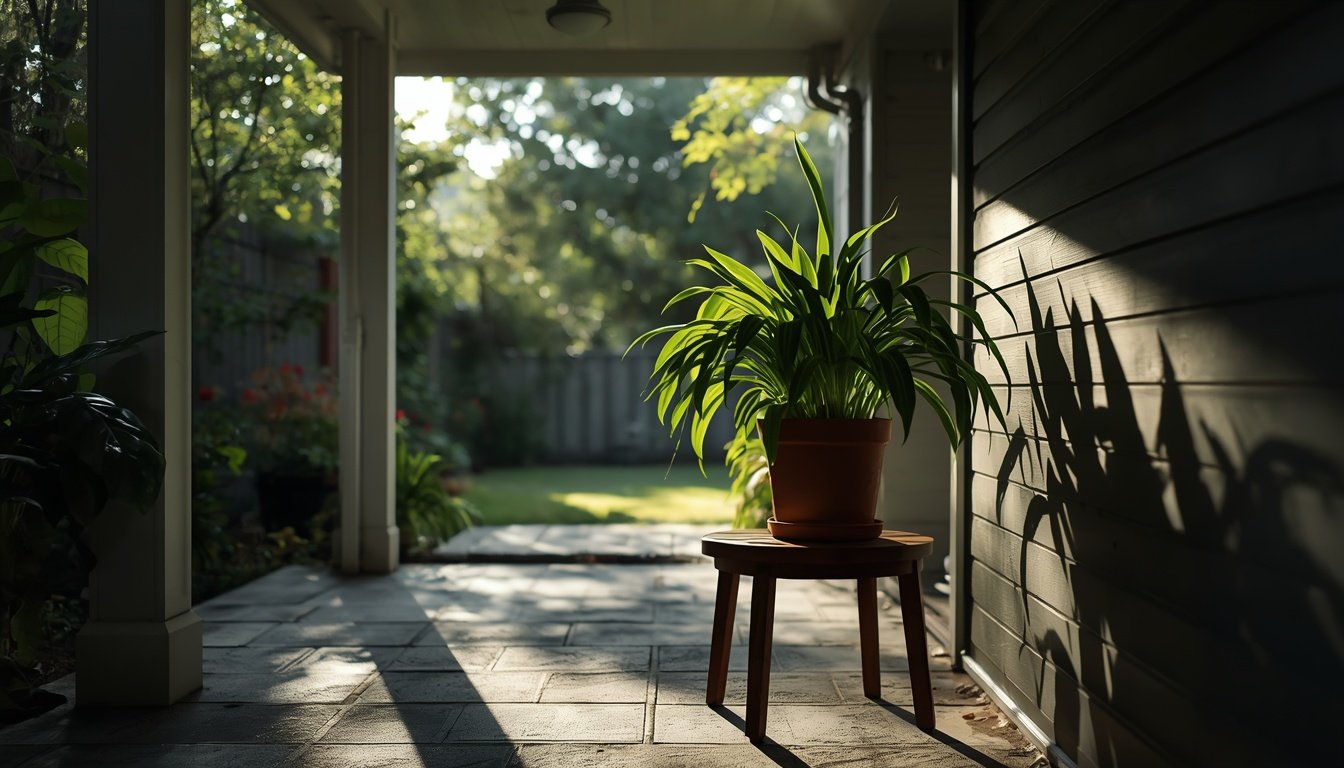
Zone 6: Winters here fall well below freezing, so a spider plant cannot be left out. Treat it as a summer container plant and bring it in before the first frost. A hardier relative, C. saundersiae ‘Starlight’, is described by the RHS as hardy enough for mild regions outdoors, but that is a different plant and still needs protection in a cold snap.
Can a Spider Plant Survive Outside in the UK?
For summer, yes, in a sheltered, shaded spot once nights are consistently mild. For winter, generally no, because most of the UK sees frost and the RHS advises frost free conditions. If the question means outside the UK, the same rule applies: in genuinely frost free climates the plant can live outdoors all year, and elsewhere it is a seasonal visitor.
Can You Plant Spider Plants Outside in the Ground?
Yes, but only where frost is not expected. Gardening Know How says it can spread aggressively as a ground cover and border plant in zones 10 and 11.
Ground planting gives roots more room and steadier moisture. The trade-offs are real, though: you cannot move it during an unexpected cold snap, and heavy clay that holds water leads to rot. Missouri Botanical Garden warns that plants are susceptible to root rot if waterlogged.
A container keeps your options open. It lets you shift the plant into shade, shelter it from storms, and inspect for pests. If you want the garden look without the risk, sink the pot into the bed for summer and lift it out in autumn.
How to Grow a Spider Plant Outdoors
Choose the Right Location
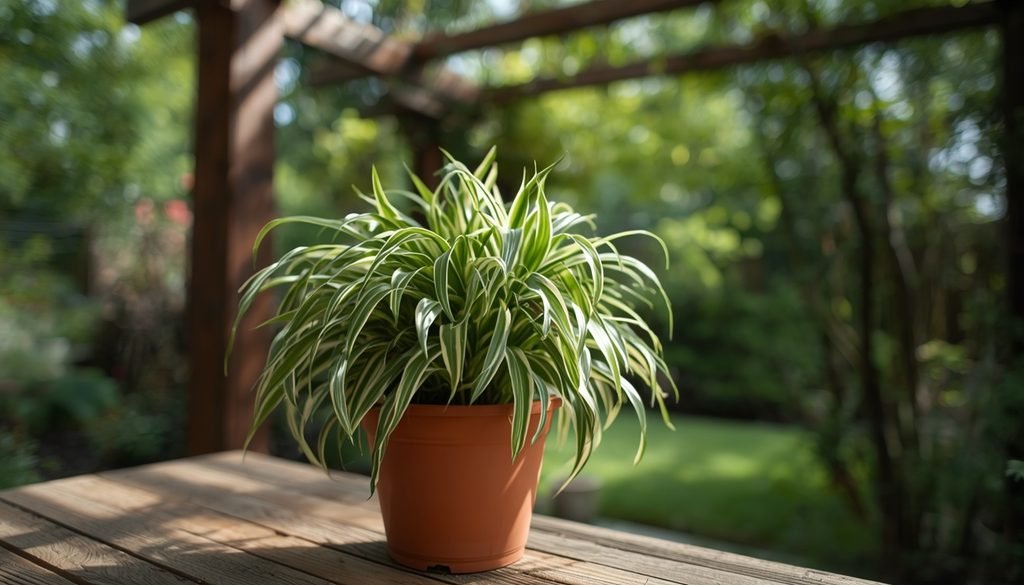
Look for bright shade, such as under a covered patio, beneath a pergola, or on the east side of a building. Shelter from strong wind, which shreds leaf tips and dries pots quickly.
Acclimate the Plant Gradually
Follow a slow schedule over roughly 10 to 14 days:
- Days 1 to 3: Place it in full shade for a few hours, then bring it back in or leave it in deep, sheltered shade.
- Days 4 to 7: Leave it out all day in bright shade.
- Days 8 to 10: Introduce gentle early morning sun for an hour or so.
- Days 11 to 14: Extend the morning light if the leaves look healthy.
Plant Addicts notes that an acclimated plant can handle about 3 to 4 hours of sun. Treat that as an upper limit, not a target. Check leaf color daily. Pale patches or curling mean the plant needs more shade. Bring it back to protection during extreme heat, heavy rain, or a cold night.
If you share your home with pets, check every houseplant before it moves back inside. Spider plants are generally reported as non toxic to cats and dogs, but some popular plants are not, and this article on whether a snake plant is toxic to cats is a useful comparison.
Use Well Draining Soil
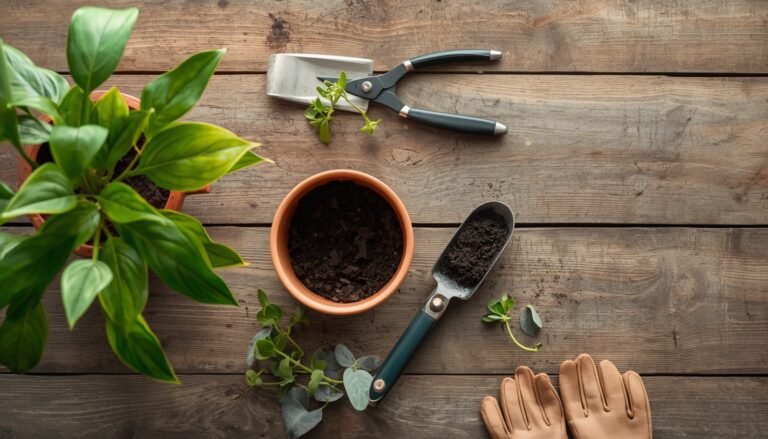
Use a light potting mix with good drainage in a container that has drainage holes. Garden soil alone compacts in pots. If you repot before moving the plant out, follow this guide on how to repot a plant. Feeding is rarely needed if the plant is repotted regularly, and heavy feeding can reduce plantlet production. For a gritty, free draining mix idea, see the best soil for snake plant, which works well for other tough houseplants too.
Water According to Conditions
Weather makes any fixed schedule unreliable. Wind, heat, and pot size change how fast the mix dries. Check the top inch of the soil and water when it feels dry. The RHS advises keeping the compost lightly moist and tipping away any water that collects in the saucer, since the plant dislikes standing in water.
After heavy rain, check that water is draining. A saturated pot for several days is a bigger risk than a missed watering, because the thick roots store water and cope with dry spells better than with soggy ones.
Outdoor pots dry at very different speeds depending on wind, heat, and pot size, so checking the soil works better than following a calendar. The same habit is explained in this guide on how often to water a snake plant, where the soil is allowed to dry before the next drink.
Protect It From Extreme Weather
Move pots under cover for storms, hail, heatwaves, and the first cold nights of autumn. Group pots together for shelter.
Spider Plant Outside Hanging Basket Care
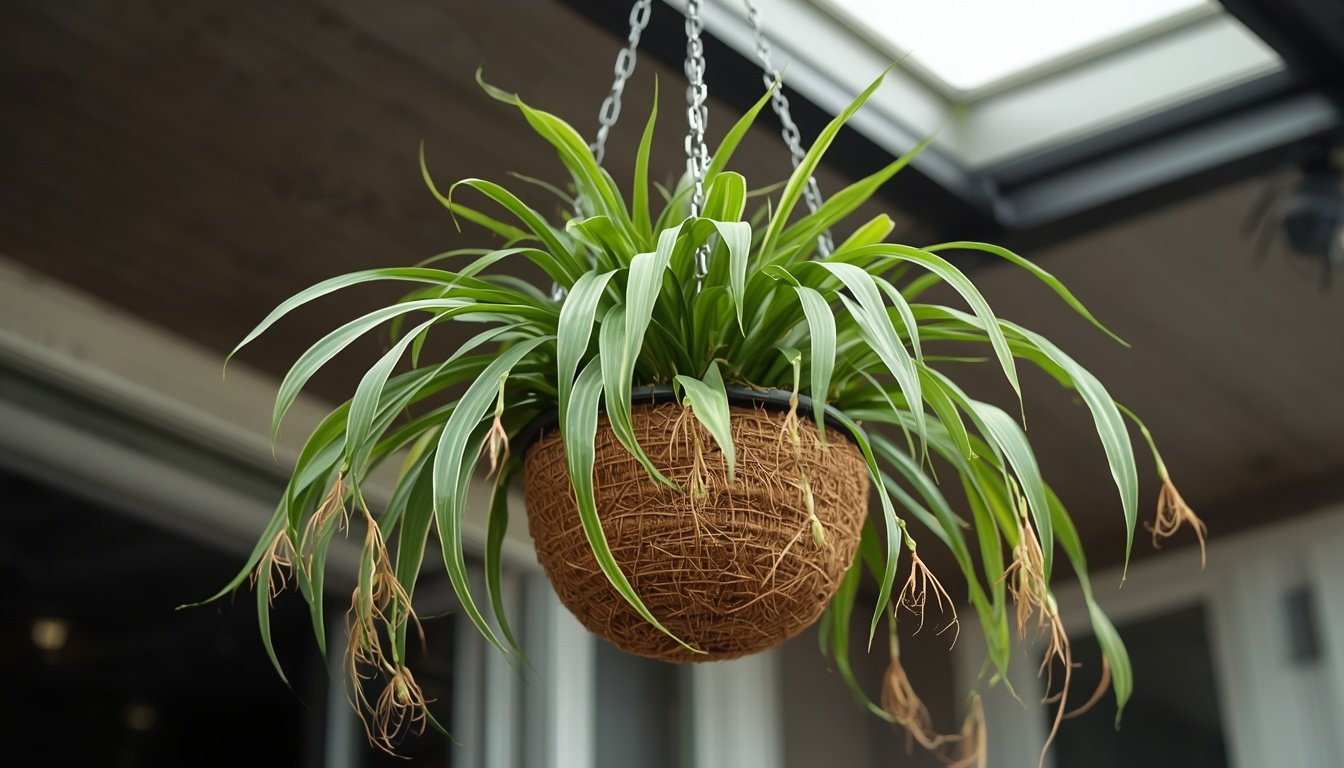
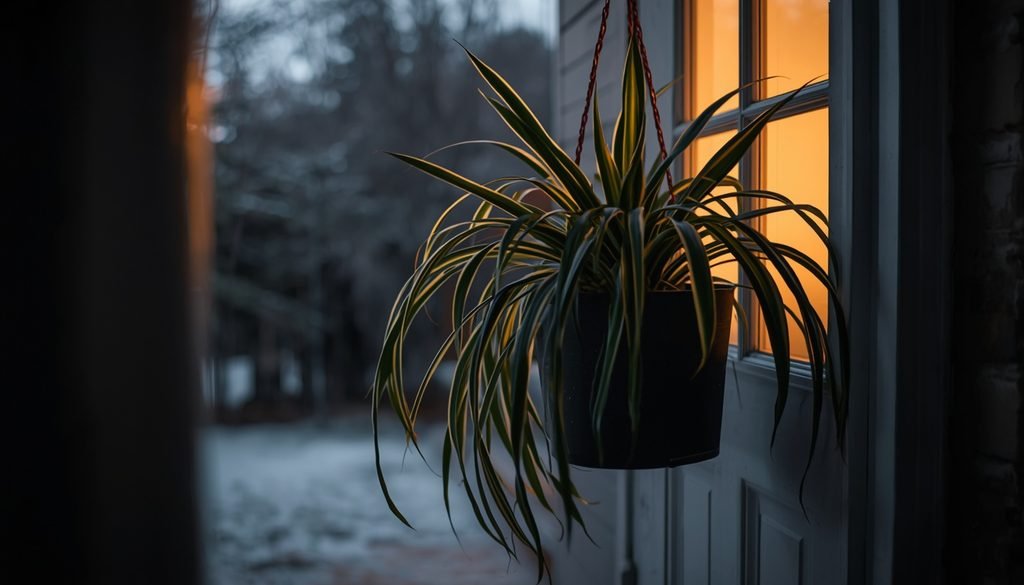
Hanging baskets suit the arching leaves and dangling plantlets, and outdoors they show the plant at its best. They also dry out faster than any other setup, because air moves around the whole container.
- Hang the basket where it gets bright shade, not on a sunny wall.
- Check moisture often in warm weather. A basket that feels light needs water.
- A coir liner holds moisture better than bare wire, but drainage still matters.
- Lower the basket during storms or strong wind.
Outdoor Pests and How to Deal With Them
Outdoor plants meet more insects than indoor ones. Missouri Botanical Garden lists whiteflies, spider mites, scale, and aphids as known problems, and Wisconsin Extension notes scale and mealybugs as the main pests. Slugs and snails can also chew tender leaves in damp weather.
Inspect the leaf bases and undersides weekly. For aphids, the RHS recommends washing them off as soon as they appear. A firm spray of water often resolves early infestations. For mealybugs, see this guide on how to get rid of mealybugs.
If you use insecticidal soap, read and follow the label, test it on one leaf first, and avoid spraying in hot midday sun. Do not increase the strength beyond what the product allows.
Spider Plant Babies Outdoors: Should You Cut Them Off?
Not necessarily. The plantlets are part of the plant’s charm, and hanging plantlets do no harm to the parent. The RHS suggests trimming them when they become gnarly and heavy, if you do not plan to pot them up. Detach them once they have their own roots to propagate them. Gardening Know How points out that plantlets will root wherever they touch soil, so ground planted specimens may spread on their own.
Cutting babies off also redirects energy to the mother plant, and fresh flower stems will soon form. Timing matters: Clemson Extension notes that most offshoots appear as days shorten in the fall. That makes late summer and early autumn a natural time to pot up new plants for the winter.
How to Bring a Spider Plant Back Indoors
Bring it in before nights approach 10°C (50°F), or earlier if you prefer to be cautious.
- Inspect thoroughly for pests, ideally a couple of weeks ahead. Plant Addicts advises treating problems outdoors before moving the plant in.
- Rinse and trim any damaged or yellow leaves.
- Repot if root bound, using the repotting guide linked above.
- Place it in bright, indirect light, away from cold drafts and heat sources.
- Water a little less often through winter as growth slows.
Some leaf drop is normal because indoor light is weaker. Keep the plant separate from other houseplants for the first couple of weeks if you are unsure about pests.
Which Situation Are You In?
- Mild climate with no frost: Plant in bright shade, choose drained soil, and watch for pests. Leave it out year round.
- Hot summers: Prioritize afternoon shade, pale colored pots, and more frequent watering checks.
- Nights turning cold: Move the plant in before the temperature reaches roughly 10°C (50°F).
- Frost forecast: Bring it inside the same day. Covering is not enough for a container plant.
- Plant has only lived indoors: Acclimate over 10 to 14 days.
- Heavy rain forecast: Move pots under cover or confirm they drain freely.
Seasonal Care Guide
| Season | Outdoor Plan | Main Risk |
|---|---|---|
|
🌱 Spring After last frost |
Acclimate gradually in shade | Cold nights, sudden sun |
| ☀️ Summer | Bright shade, check water often | Heat, dry pots, scorch |
| 🍂 Early Autumn | Inspect for pests, prepare to move in | Cool nights, pests |
| ❄️ Late Autumn & Winter | Indoors, bright indirect light | Frost, overwatering |
Common Mistakes
- Moving the plant straight into strong sun. Scorch happens fast and does not reverse.
- Leaving it out on a frosty night. One night is enough to cause serious damage.
- Keeping the soil constantly wet. Roots need air as well as moisture.
- Hanging a basket in afternoon sun. Baskets dry and overheat quickly.
- Ignoring wind. Constant wind dries leaf tips and topples pots.
- Assuming your summer matches everyone else’s. Climate, humidity, and night temperatures vary widely.
- Skipping pest checks. A few insects outdoors become a bigger problem indoors.
- Bringing a stressed plant inside untreated. Deal with pests and rot before it joins your other plants.
The Practical Answer
A spider plant can live outside when the air is mild, the light is soft, and the soil drains. In frost free climates that can be all year. Everywhere else, treat it as a summer guest, acclimate it slowly, and bring it back in before the nights cool.
Frequently Asked Questions
Can spider plants survive in full sun?
Usually not. Full sun scorches the leaves and dries the pot quickly, especially on variegated plants. Bright shade with gentle morning sun is safer. If a plant must take more light, acclimate it over several weeks and water carefully.
How long can spider plants stay outside?
They can stay out as long as nights stay mild and frost is absent. In cool climates that means roughly spring to early autumn. In frost free regions, they can remain outdoors all year in a shaded, drained position.
Can a spider plant survive outside the UK?
In frost free climates, yes, all year. In the UK, it can spend summer outdoors in a sheltered, shaded spot, but most areas need it indoors for winter because the RHS advises frost free conditions.
Should I cut the babies off my spider plant?
Only if you want to. Removing them does not harm the parent, and it helps when they become heavy. Detach them once they have roots and pot them up, or leave them hanging for a fuller look.
Can spider plants live outside in winter?
Only where winters are frost free. In colder places, bring the plant inside before nights approach 10°C (50°F). Cold damage shows as limp, water soaked leaves that turn brown or black.
Can spider plants survive frost?
No. Frost damages leaf tissue and can kill roots in prolonged cold. Some plants resprout from firm roots after damage, but do not rely on that. Bring containers inside before frost is forecast.
Can spider plants be planted in the ground?
Yes, in frost free climates, in bright shade with drained soil. Ground planted spider plants can spread. In colder regions, grow them in pots so you can move them in autumn.
Can spider plants grow in hanging baskets outside?
Yes. Choose bright shade and shelter from wind, and check moisture often because baskets dry fast. Bring baskets down for storms and indoors before cold nights arrive.
What temperature is too cold for a spider plant?
Growth slows and stress rises below about 10°C (50°F), and frost near 0°C (32°F) causes damage. Exact tolerance varies with cultivar, duration, and wetness, so bring plants in early.
How do I acclimate a spider plant to outdoor light?
Start with a few hours in full shade, then extend to all day in bright shade over about a week. Add gentle morning sun last. Watch for pale patches or curling and retreat to shade if they appear.
Final Thoughts
So, can spider plants live outside? Yes, as long as the climate is mild, the light is soft, and the soil drains well. In frost free regions they can stay out all year, while everywhere else they are best treated as summer guests that come inside before the nights turn cold. Acclimate slowly, water by checking the soil, and inspect for pests before the move indoors.
If you enjoy plants that forgive a few mistakes, you may also like the benefits of growing a snake plant and this beginner guide on how to care for air plants.