
Indoor Plant Care Guide: 9 Essential Tips for Beginners
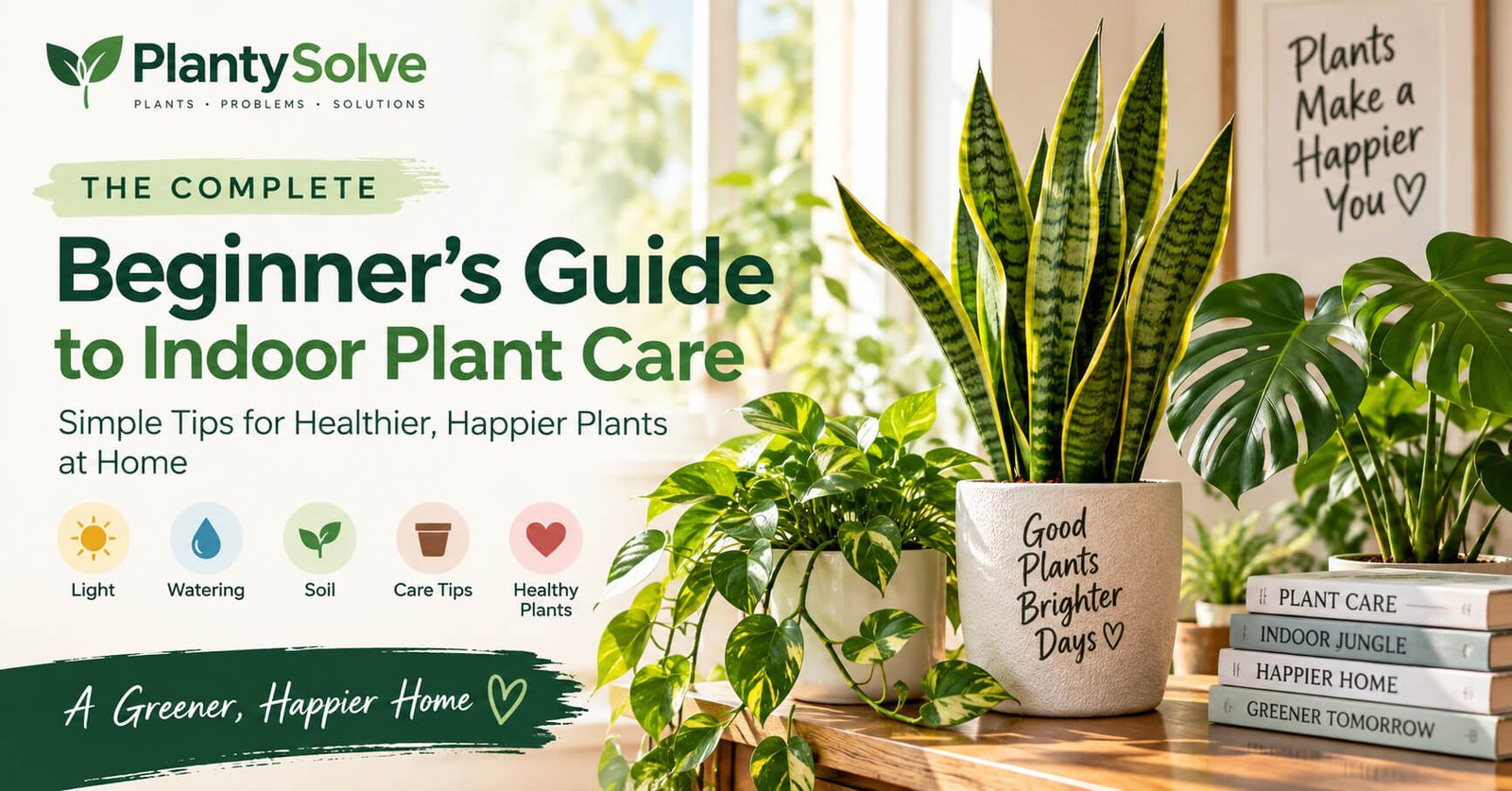
Grow Healthy Houseplants With Confidence
A practical beginner’s guide to choosing plants, understanding light, watering correctly, selecting soil, and preventing common indoor plant problems.
This indoor plant care guide helps beginners grow healthy houseplants at home. Learn essential tips for watering, sunlight, soil, humidity, fertilizing, and preventing common indoor plant problems.
Bringing a plant into your home is exciting, but keeping it healthy can feel confusing when you’re just starting out.
How much water does it need? Where should you put it? Why are the leaves turning yellow? These are common questions for first-time plant owners.
The good news is that indoor plant care becomes easier once you understand a few basic principles.
Instead of following a rigid schedule, you will learn how to observe your plant and respond to what it needs.
You can also explore our complete Plant Guides collection for more beginner-friendly growing advice.
1. Choose the Right First Houseplant
The easiest plant is the one that matches your home. Before buying, consider how much natural light you have, how often you are away, and whether you have pets that might chew the leaves.
These two popular plants are often recommended to beginners, although they have different care needs.
Snake Plant
Snake plants tolerate a range of indoor light conditions. Let the potting mix dry well between waterings and avoid leaving the roots in water.
Pothos
Pothos is a trailing vine that generally grows well in medium to bright indirect light. Water when the upper potting mix has dried.
2. Understand Indoor Plant Light
Light provides the energy plants need to grow. Different species need different light levels, so placement matters.
Bright Indirect Light
This usually means a bright location without prolonged, harsh direct sunlight striking the leaves.
Many tropical foliage plants prefer bright indirect light. A position near a suitable window may provide the conditions they need.
Direct Sunlight
Direct sunlight reaches the plant without being blocked by a curtain or other object. Some succulents and sun-loving species benefit from it.
Lower Light
Lower-light areas receive less natural light, but plants still need enough illumination to maintain healthy growth.
Watch your plant after moving it. Pale growth, stretching toward the window, or unusually slow growth may indicate insufficient light.
Scorched patches can indicate excessive direct sunlight. Make changes gradually and observe how the plant responds.
For more advice about everyday growing conditions, visit our Plant Care hub.
3. Learn How to Water Correctly
Watering is one of the most important indoor plant care skills. A common mistake is assuming every plant needs water on the same schedule.
Check the Soil First
Insert a finger into the upper part of the potting mix. If it still feels damp, wait before watering plants that prefer some drying.
The correct depth and dryness depend on the plant species, pot size, season, and growing conditions.
Water Thoroughly
When watering is needed, apply water evenly until excess begins to drain from the bottom of the pot.
Allow the excess water to drain away. Do not leave the pot standing in water unless you are using a specific watering method appropriate for that plant.
Understand Watering Symptoms
Plant symptoms provide clues, but a single symptom does not always identify the cause. Check the soil, drainage, roots, and growing conditions before changing your routine.
| Observation | Possible Meaning | What to Check |
|---|---|---|
| Dry soil and wilting | Possible underwatering | Check moisture throughout the pot |
| Wet soil and yellow leaves | Possible excess moisture | Inspect drainage and roots |
| Water runs straight through | Mix may be very dry or poorly absorbing | Check whether the root ball becomes moist |
4. Choose the Right Soil and Pot
A healthy root system needs a suitable balance of moisture and air. The ideal potting mix depends on the plant.
Use an Appropriate Potting Mix
Many tropical foliage plants benefit from a mix that retains some moisture while allowing excess water to drain.
Cacti and many succulents generally need a faster-draining mix suited to their roots.
Choose a Pot With Drainage
A drainage hole makes it easier for excess water to escape and helps reduce the risk of waterlogged soil.
Do Not Oversize the Pot
A much larger pot can hold moisture longer than the root system can use it.
When repotting, choose a container appropriate for the plant’s current roots.
5. Temperature and Humidity
Most common tropical houseplants prefer relatively stable indoor conditions, although their exact requirements vary.
Keep sensitive plants away from cold drafts, heating vents, and sudden temperature changes.
Does Your Plant Need More Humidity?
Some tropical species appreciate higher humidity, especially in dry indoor environments.
If a plant genuinely needs increased humidity, a room humidifier or suitable growing environment may help more consistently than occasional misting.
6. Fertilizer Basics for Beginners
Plants need nutrients, but fertilizer is not a replacement for proper light, watering, and healthy roots.
Start with a fertilizer suitable for your plant and follow the product label carefully.
Fertilizer needs often decrease when growth slows, such as during darker seasons.
7. Recognize Common Plant Problems
Even experienced plant owners encounter yellow leaves, brown tips, drooping, and occasional pests.
The key is to identify the symptom, inspect the growing conditions, and avoid guessing.
If you notice unusual symptoms, explore the Plant Problems hub for more symptom-based help.
🍃 Yellow Leaves
Check watering, drainage, light, pests, and whether an older leaf is naturally aging.
🍂 Brown Leaves
Brown tips or patches may result from several environmental or plant-health factors.
🥀 Wilting
Wilting can occur when roots cannot supply enough water, including when soil is excessively dry or roots are damaged.
🐛 Plant Pests
Inspect leaf undersides, stems, and new growth for insects, webbing, or sticky residue.
8. Your First 30-Day Indoor Plant Care Plan
A simple routine can help you become familiar with your new plant without overwatering or making unnecessary changes.
Week 1 — Observe
- Place the plant in suitable light.
- Check soil moisture before watering.
- Inspect leaves and stems for pests.
- Make sure excess water can drain.
Week 2 — Learn Its Pattern
- Observe how quickly the mix dries.
- Watch for new growth or leaf changes.
- Avoid moving the plant unnecessarily.
Week 3 — Adjust Carefully
- Reassess the light if growth looks weak.
- Check whether the watering approach suits the plant.
- Clean dusty leaves when appropriate.
Week 4 — Build Your Routine
- Continue checking moisture instead of watering by calendar alone.
- Inspect for pests regularly.
- Record any changes in leaf color or growth.
- Make one adjustment at a time when possible.
Remember that plant growth may be slow, especially during periods of limited light.
A healthy plant does not need to produce new leaves every week.
9. Frequently Asked Questions
What is the easiest indoor plant for beginners?
Snake plants and pothos are popular beginner choices, but the easiest option depends on your home’s light conditions and your ability to meet the plant’s needs.
How often should I water indoor plants?
There is no universal watering schedule. Check the potting mix and follow the moisture requirements of your specific plant.
Can indoor plants survive without sunlight?
Plants need light for photosynthesis. Some tolerate lower light, but a windowless space generally requires an appropriate grow light.
Why are my indoor plant leaves turning yellow?
Possible causes include watering problems, inadequate light, pests, root issues, and natural leaf aging. Inspect the plant before choosing a solution.
Should I repot a plant immediately after buying it?
Not necessarily. First assess the plant’s health, roots, and growing medium.
Repot when there is a clear reason, such as an unsuitable mix or a severely root-bound container.
Do indoor plants need fertilizer?
Plants need nutrients, but the amount and timing depend on the species, potting mix, and growth rate.
Follow a suitable fertilizer’s instructions.
Need Help With Your Plant?
Explore PlantySolve’s plant problem guides to identify symptoms and understand possible causes.
Explore Plant Problems →Final Thoughts
Successful indoor plant care starts with understanding your plant’s environment.
Choose a suitable species, provide the right light, check soil moisture before watering, and watch for changes.
You do not need to master everything at once. Start small, observe regularly, and adjust your routine as you learn.
For additional educational information about houseplants, explore the Royal Horticultural Society houseplant resources .
Happy growing from PlantySolve! 🌿
One Comment