
Best Soil for Snake Plant: Easy DIY Mix & Potting Guide
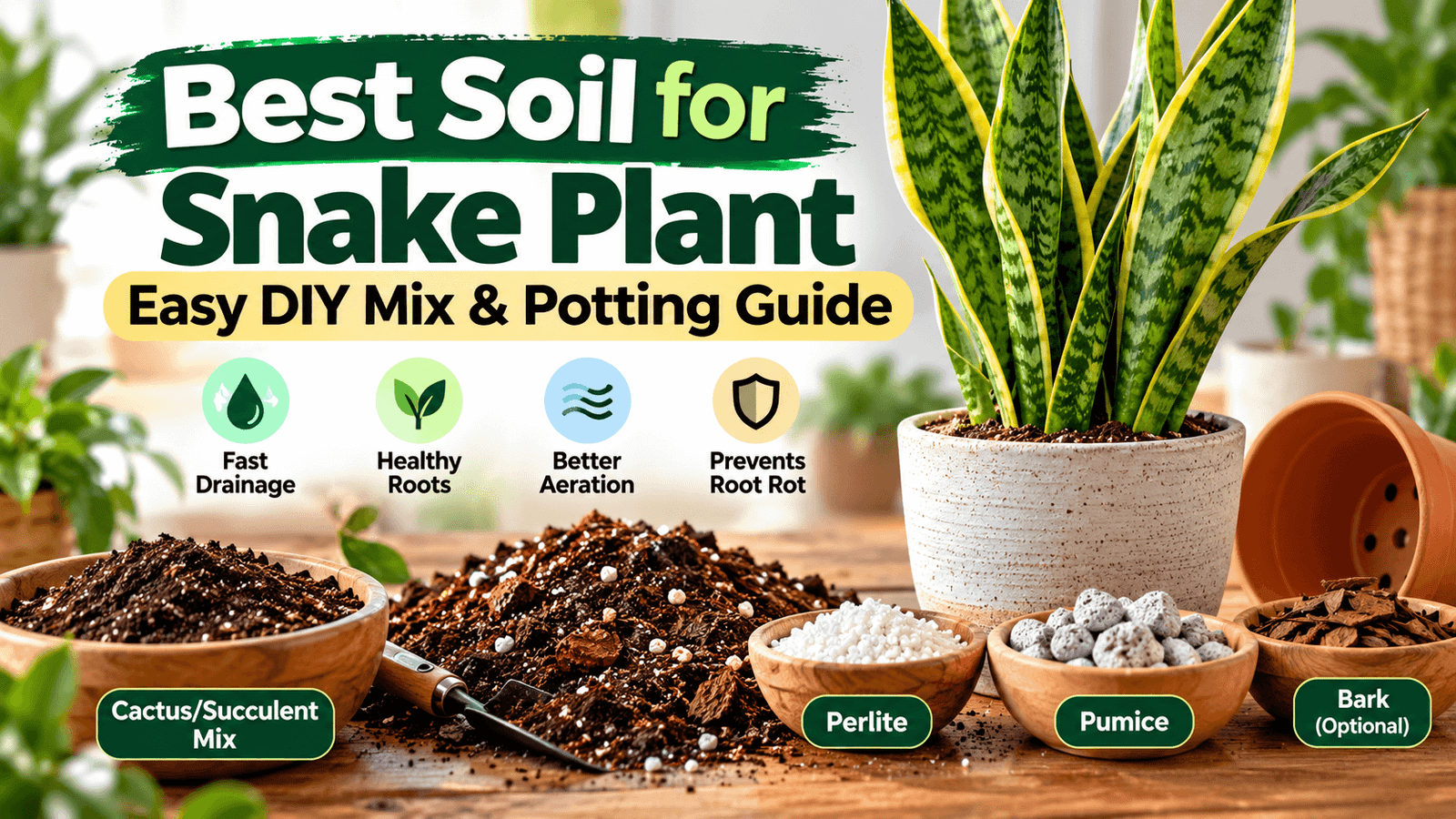
The best soil for snake plant is a loose, fast-draining potting mix that allows excess water to escape while keeping enough air around the roots. A cactus or succulent mix is an excellent starting point, especially when combined with perlite or pumice if the original mix feels dense.
What Is the Best Soil for Snake Plant?
Snake plant, botanically known as Dracaena trifasciata and formerly classified as Sansevieria trifasciata, handles dry conditions better than persistently wet roots. This makes drainage one of the most important characteristics of a good snake plant potting mix.
This is supported by NC State Extension’s snake plant guidance , which recommends well-drained soil and careful watering because overwatering can lead to root rot.
Penn State Extension also recommends well-drained soil and specifically notes that a cactus potting mix or a mix containing perlite can work well for snake plants.
A Good Snake Plant Mix
- Allows excess water to drain
- Feels loose rather than muddy
- Contains aeration material
- Does not compact into a dense mass
- Works with a pot that has drainage
A Risky Snake Plant Mix
- Stays saturated for long periods
- Becomes dense and airless
- Contains mostly very fine material
- Uses heavy garden soil straight from the yard
- Sits in a container where water cannot escape
What Does Snake Plant Soil Need?
1. Fast Drainage
Excess water should move through the potting medium and leave through the drainage hole instead of remaining trapped around the roots.
2. Good Aeration
Coarse particles help maintain open spaces in the potting mix, keeping the root zone from becoming excessively compacted.
3. Stable Structure
The mix still needs enough body to support the plant’s tall, upright leaves while remaining reasonably loose.
What Is the Best DIY Soil Mix for Snake Plant?
🌱 PlantySolve Simple DIY Mix
Measure with cups, scoops or any container you have available. Maintaining the approximate ratio matters more than the measuring tool itself.
Treat this recipe as a practical starting point rather than a rigid formula. Commercial cactus mixes vary. Some are already very porous, while others contain finer ingredients and hold noticeably more water.
Which Ingredients Are Best for Snake Plant Soil?
| Ingredient | Main Job | Best Use | Watch For |
|---|---|---|---|
| Cactus/Succulent Mix | Provides the main potting base | Easy starting point | Texture differs between brands |
| Perlite | Adds pore space and aeration | Lightening dense mixes | Very lightweight particles may migrate upward |
| Pumice | Adds porous mineral structure | Aeration with additional weight | Can be more expensive or harder to find |
| Coarse Bark | Adds chunky structure | Opening up fine potting mixes | Best used as part of a balanced blend |
| Horticultural Grit | Adds mineral structure | Improving physical texture | Avoid very fine material that encourages compaction |
| Organic Potting Material | Provides moisture and nutrient retention | Part of the base mix | Too much can increase water retention |
Perlite vs. Pumice: Which Is Better for Snake Plants?
Both can be useful. Perlite is lightweight, widely available and effective for opening up dense potting media. Pumice is heavier and provides durable porous structure. You do not need both for every snake plant.
Penn State’s snake plant guidance specifically mentions cactus potting mix or a mix containing perlite, giving perlite a solid horticultural basis as a practical amendment for this plant.
Can You Use Cactus Soil for a Snake Plant?
However, do not choose soil by the front of the bag alone. Different brands can have noticeably different textures. Inspect the mix and observe how it behaves after watering.
Can You Use Regular Potting Soil for a Snake Plant?
The problem is not that every general-purpose potting mix is harmful. The problem is that some mixes hold considerably more moisture than a snake plant needs, especially when combined with low light, frequent watering or an oversized container.
University of Minnesota Extension also advises using new potting soil for indoor plants rather than garden soil. You can read its indoor plant guidance here .
How Should You Adjust Snake Plant Soil for Your Home?
| Your Conditions | Likely Effect | What to Consider |
|---|---|---|
| Lower light | Water use may be slower | Prioritize an airy mix and cautious watering |
| Higher humidity | Drying may be slower | Add aeration if the medium consistently stays wet |
| Warm, brighter room | Moisture may be lost faster | Observe the plant before making the mix excessively gritty |
| Plastic or glazed pot | Less moisture escapes through the container walls | Pay attention to drainage and soil moisture |
| Terracotta pot | Porous walls can contribute to faster moisture loss | Check the medium instead of following a fixed schedule |
| Oversized container | More potting medium surrounds the root system | Avoid unnecessarily large jumps in pot size |
This is one reason the best soil for snake plant cannot be separated from watering. After choosing the soil, use the methods in our How Often to Water a Snake Plant guide to decide when the plant actually needs water rather than watering on a rigid calendar.
Does a Snake Plant Pot Need a Drainage Hole?
After watering, allow excess water to drain completely. If the nursery pot sits inside a decorative cachepot or on a saucer, make sure the plant is not left standing in collected water.
Penn State recommends choosing containers with drainage holes for snake plants to help prevent soggy soil. University of Minnesota Extension similarly notes that drainage holes allow excess water to escape and can reduce root-rot risk in houseplants.
How Do You Know If Snake Plant Soil Is Too Wet or Too Dense?
Warning Signs
- Potting mix remains soggy
- Water pools rather than draining normally
- Mix has compacted heavily
- Leaf bases become soft
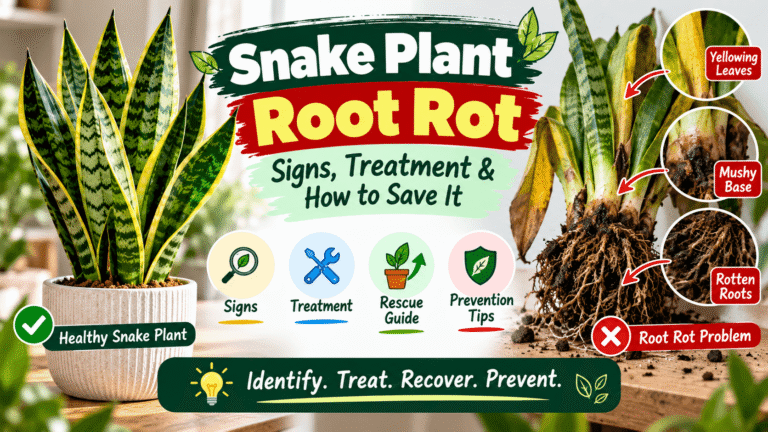
- Roots or rhizomes appear brown and mushy
- An unpleasant rotting odor develops
Healthier Soil Behavior
- Excess water can leave the pot
- Texture remains reasonably open
- Root zone is allowed to dry between waterings
- Roots remain firm rather than mushy
- No standing water remains around the pot
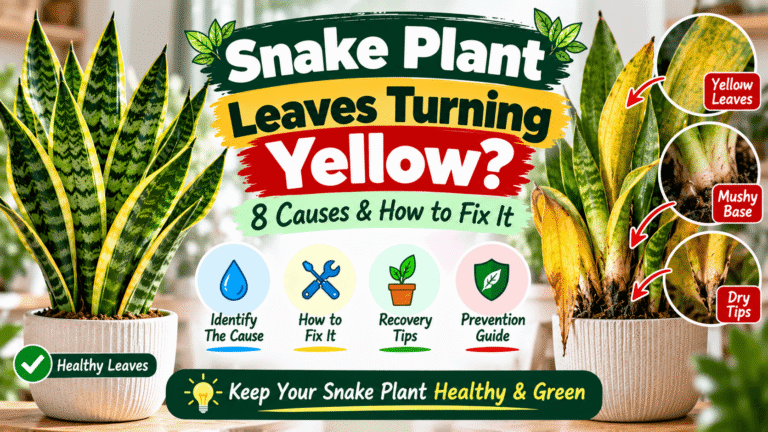
Do not diagnose the problem from one yellow leaf alone. Similar visible symptoms can have multiple causes. Combine the leaf symptoms with soil moisture, root condition, drainage and recent watering history.
NC State Extension specifically lists overwatering as a cause of root rot in snake plants, making the condition of the root zone an important part of troubleshooting.
What Soil Should You Use After Snake Plant Root Rot?
Changing the soil without changing the care routine may allow the same problem to return. Review how often the plant is watered, whether excess water can escape, the size of the pot and the amount of light the plant receives.
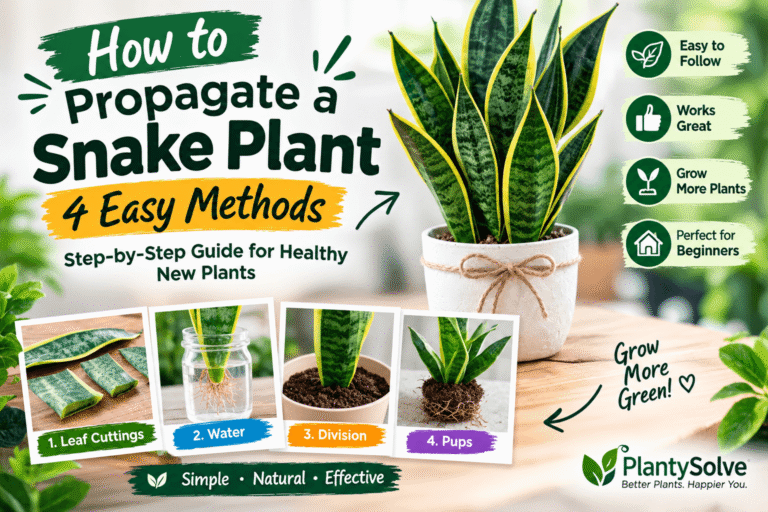
If healthy material needs to be separated from a damaged plant, our How to Propagate Snake Plant guide explains leaf cuttings, division, pups and water propagation.
How Do You Repot a Snake Plant Into Fresh Soil?
-
Remove the snake plant gently.
Support the plant near the base and ease the root ball from the container rather than pulling hard on individual leaves. -
Inspect the roots and rhizomes.
Look for firm healthy tissue and investigate any areas that are clearly mushy, rotten or damaged. -
Prepare fresh potting medium.
Use a loose cactus/succulent-based mix or another well-drained blend appropriate for snake plants. -
Choose the right pot size.
Avoid moving a modest root system into a dramatically oversized container. -
Position the plant correctly.
Keep the crown and leaf bases at an appropriate level rather than burying them deeply. -
Fill without excessive compression.
Settle the potting medium around the roots while preserving its open structure. -
Return to moisture-based watering.
Check the condition of the potting mix before watering again rather than automatically watering because a certain number of days has passed.
For additional general repotting guidance, see University of Minnesota Extension’s houseplant care guidance .
What Are the Most Common Snake Plant Soil Mistakes?
1. Choosing by Label Alone
A “cactus” label is useful, but the actual texture and drainage performance matter more than marketing language.
2. Ignoring the Pot
Even excellent soil cannot perform properly if excess water has nowhere to escape.
3. Using an Oversized Container
A much larger pot can surround a small root system with a larger volume of moist potting medium.
4. Packing the Mix Too Tightly
Excessive compression reduces the open structure that helps keep the root zone aerated.
5. Using Very Fine Sand as a Fix
Fine particles can contribute to a dense texture rather than producing the open structure you intended.
6. Fixing Soil but Not Watering
New potting mix cannot solve persistent overwatering if you keep adding water before the root zone has dried sufficiently.
Best Soil for Snake Plant: Quick Decision Guide
| If You Have… | Practical Approach |
|---|---|
| A good cactus/succulent mix | Use it as your starting medium and observe its drainage. |
| A cactus mix that feels too fine | Add perlite or pumice to increase pore space. |
| Only general indoor potting mix | Improve a dense mix with suitable coarse aeration material. |
| A humid or low-light room | Prioritize good drainage and conservative watering. |
| A container without drainage | Prefer moving the plant to a pot with functional drainage. |
| A snake plant recovering from rot | Use fresh airy medium and correct the moisture conditions that contributed to the problem. |
Frequently Asked Questions About Snake Plant Soil
What is the best soil for snake plant?
The best soil for snake plant is a loose, well-drained potting medium. A cactus or succulent mix is a convenient starting point, and perlite or pumice can be added when the mix needs more aeration.
Can I use cactus soil for a snake plant?
Yes. Cactus or succulent potting mix is generally suitable for snake plants because good drainage is a priority. Check the specific product’s texture and amend it if it is unusually dense.
Can I use regular potting soil for a snake plant?
Regular potting mix can form part of the blend, but dense, moisture-retentive mixes are better amended with perlite, pumice or another suitable coarse material before use.
Is perlite or pumice better for snake plants?
Both can work. Perlite is lightweight and readily available, while pumice is heavier and provides durable porous structure. Choose based on the texture of your existing mix and what is readily available.
Do snake plants need drainage holes?
A functional drainage hole is strongly preferable for typical indoor snake plant care because it allows excess irrigation water to leave the container instead of remaining around the roots.
Should snake plant soil stay moist?
Snake plant soil should not remain persistently waterlogged. Allow the potting medium to dry between waterings and check its condition before watering again.
Can I use succulent soil for a snake plant?
Yes. A freely draining succulent potting mix can be a good choice. Check how the particular product performs in your container and indoor conditions.
Why is my snake plant soil staying wet?
Possible causes include a dense potting mix, poor drainage, an oversized container, lower light, cooler conditions or watering again before the root zone has dried sufficiently.
The Bottom Line
The best soil for snake plant is not defined by one brand or one rigid recipe. What matters most is a loose, well-drained and aerated potting medium that works together with your container and watering routine.
For a simple starting point, choose cactus or succulent potting mix. If the mix is too dense, add perlite or pumice. Pair it with a pot that drains properly, then allow the root zone to dry between waterings.
Once the soil is right, use our snake plant watering guide to avoid undoing good drainage with excessive watering.
Authoritative Horticultural References
NC State Extension: Snake Plant – Dracaena trifasciata
Penn State Extension: Snake Plant: A Forgiving, Low-Maintenance Houseplant
University of Minnesota Extension: Spring Houseplant Care
One Comment