How to Water Air Plants: Soak, Dry, and Adjust (Easy Guide)
The name is misleading. Air plants cannot live on air alone, and learning how to water air plants correctly is one of the habits that matters most for keeping a Tillandsia healthy. The routine is short: soak, drain, dry, and adjust to your room. Two common mistakes are skipping the drying step and trusting a spray bottle to do a soak’s job.
To water air plants, submerge them in tepid water for 20 to 30 minutes about once a week (or rinse under a tap). Gently shake out excess water, then let them dry upside down or on their side in good airflow until fully dry (within ~4 hours).
Air Plant Symptom Checker
| Symptom | Likely Cause | What To Do |
|---|---|---|
| Leaves curl inward along their length or look wrinkled | Dehydration | Soak for 20 to 30 minutes, dry well, and recheck over the next few days. |
| Leaves feel dry or brittle | Too little water / Dry air | Soak, then add light misting between soaks if the air is dry. |
| Brown or dry leaf tips | Thirst / Natural damage | Improve watering first. Trim dead tips only after the plant is hydrated. |
| Base looks dark and soft, or leaves pull away easily | Possible Rot (Trapped Moisture) | Stop soaking, shake out the plant, dry it in moving air, and water less. Watch it for several days. |
| Plant is still damp after four hours | Poor Airflow | Drain it upside down and move it to a spot with moving air. |
| Leaves look plumper and smoother after watering | Normal Rehydration | Treat this as the healthy baseline for judging future thirst. |
One symptom alone rarely tells the full story, so compare it with your recent watering and your room conditions.
Before You Start: Is Your Air Plant Gray or Green?
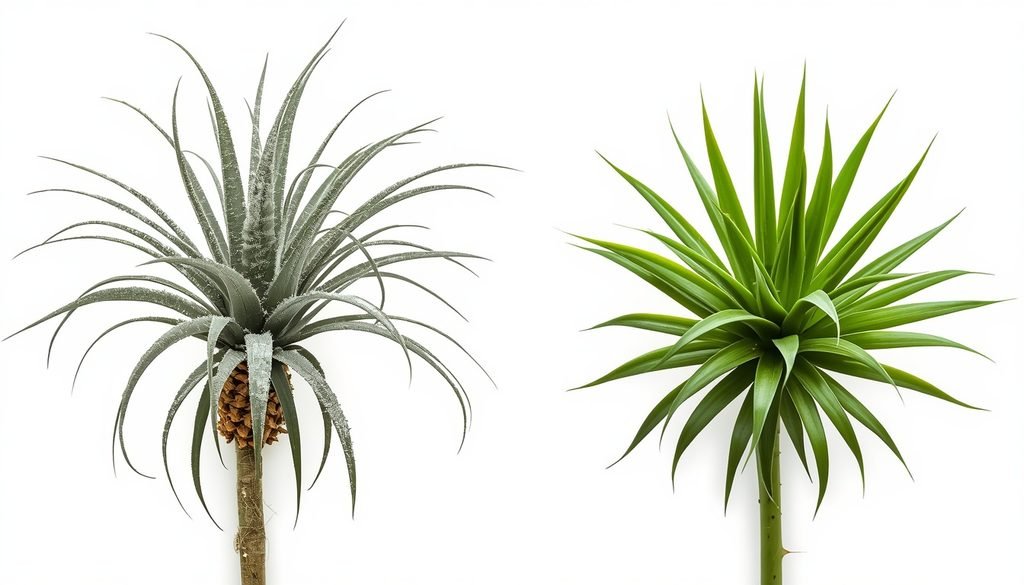
Air plants fall into two broad groups, and the group changes the best method. According to Penn State Extension, mesic species come from moderately humid regions, while xeric species come from desert-like climates and carry more trichomes, the tiny scales that give leaves a gray, fuzzy look.
| What You See | Likely Type | Good Starting Method |
|---|---|---|
| Silver, fuzzy leaves, often wider or flatter | Xeric (Dry Region) | Quick dunk or rinse, or a shorter soak |
| Deep green, smoother, slightly cupped leaves | Mesic (Humid Region) | Full soak |
| Light green with some fuzz | In Between | Soak, then watch how the plant responds |
The NYBG plant information service uses the same visual clue. If you are unsure of a plant’s origin, leaf color and texture are a reasonable guide.
How to Water Air Plants Step by Step
Step 1: Prepare the Right Water
Fill a bowl, basin, or sink with tepid water, deep enough to cover the whole plant. Water at room temperature to lukewarm is gentler than cold water. Avoid artificially softened water, and see the water sections below if your tap water is a concern.
Step 2: Soak or Thoroughly Wet the Plant
Submerge the plant completely and press it down if it floats. Most plants need 20 to 30 minutes, and silver, fuzzy plants need much less. If your plant is in bloom, keep the flower above the surface so it is not soaked. Avoid soaking several plants together if one looks diseased, because fungal problems can spread through shared water.

Step 3: Remove Excess Water
Lift the plant out and shake it gently, paying attention to the base where the leaves overlap. Water that stays in the center is what leads to rot. Place the plant upside down or on its side on a towel or rack so water drains out from between the leaves.
Step 4: Let the Air Plant Dry Completely
Set the plant in a bright spot with moving air. Most care guides aim for a plant that is dry within about four hours, and some suppliers give a shorter window of three hours. Do not put it back into a closed glass globe or a tight display until it is completely dry.
How to Dry Air Plants Properly
Drying matters as much as watering. An air plant that stays wet in a still, humid spot can develop rot at the base, and airflow is the simplest way to prevent that. Higher room humidity slows drying, so a plant that dries in three hours in a dry room may take much longer in a damp one.
A practical dryness test: look into the base where the leaves join. There should be no droplets, and the leaves should return to their normal color, since leaves often look darker when wet.
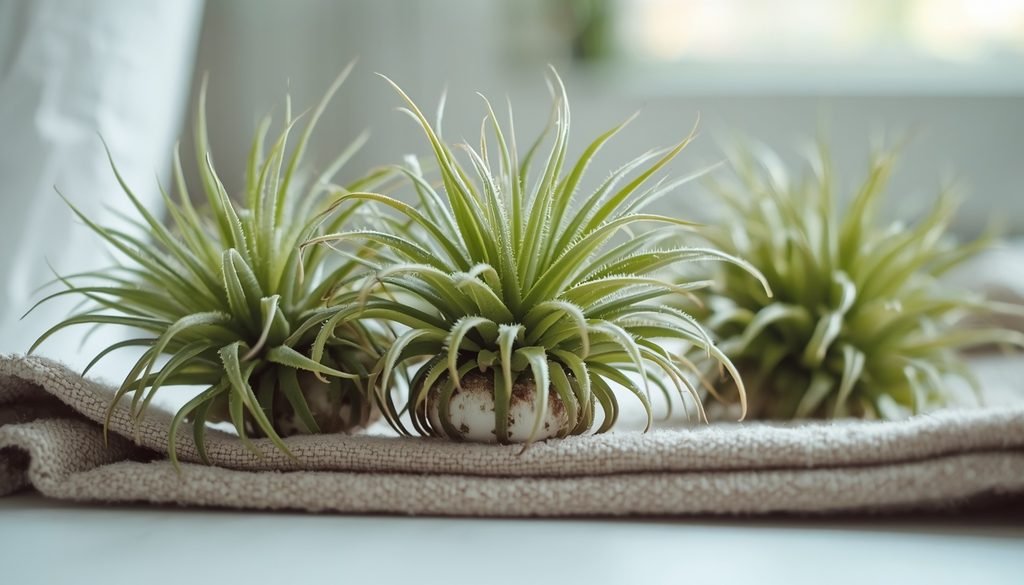
If you need to speed things up, place the plant near a small fan on a low setting. Bright, indirect light helps too.
What to Do If Your Air Plant Stays Wet Too Long
Shake out the plant again, turn it upside down, and move it to a spot with better airflow. Shorten the next soak and make sure the plant has room around it. Over the following days, check the base for dark, soft tissue or leaves that pull away easily. Those signs suggest rot, so water less until the plant recovers.
How Often to Water Air Plants
A good starting point is one soak of 20 to 30 minutes each week. The NYBG plant information service suggests watering once or twice per week by immersion, while some growers stretch the gap to ten days or two weeks in cool, humid homes. No single schedule fits every home, so use weekly as a baseline and adjust from there.
If leaves curl or tips dry out, water sooner or more thoroughly. If the base darkens or the plant stays damp, water less often and improve airflow.
Soil plants such as snake plants tell you when to water through the soil. Air plants have no soil, so the plant itself is your signal. For a contrast in approach, see how often to water a snake plant.
Is It Better to Soak or Mist Air Plants?
For most air plants, soaking is better than misting. A soak wets the whole plant, while several growers note that a light mist does not saturate the leaves. Misting works best as a supplement between soaks, especially in dry rooms.
| Method | Best For | Advantages | Limitations |
|---|---|---|---|
| Soaking | Most mesic (green) plants | Thorough hydration, easy to time | Needs a container and careful drying |
| Dunking / Rinsing | Silver, fuzzy plants, or quick top ups | Fast, uses less water | May not fully hydrate a very dry plant |
| Misting | Dry rooms, between soaks, some fuzzy species | Quick, adds a little humidity | Rarely enough alone for most plants |
| Spraying to Runoff | Large collections | Wets everything at once | Water can sit in the base if drying is poor |
Some fuzzy species are the exception. Certain growers treat Tillandsia tectorum as a plant to mist thoroughly rather than soak, and one grower guide suggests misting it about weekly in dry climates or every few weeks in humid ones. Penn State Extension notes that in homes with very low humidity, misting to runoff may be needed every other day.
How to Water Air Plants Indoors
Indoor air is often drier than a plant’s natural habitat, so a routine matters more than it would outdoors. Choose one spot for watering, such as a kitchen sink, and one spot for drying, such as a rack near a window.
Penn State Extension notes that air plants do best in bright, indirect light, preferably from an east or west window. Nighttime temperatures above 55°F (about 13°C) and daytime temperatures between 65°F and 90°F (about 18°C to 32°C) suit most plants. Avoid placing them near heating vents or air conditioners, which can dry them out quickly.
If your air plants live in a glass terrarium, allow at least four hours of drying before returning them. Unlike potted plants, air plants have no repotting step, though you can review how to repot a plant if you also grow soil plants.
How to Water Air Plants That Are Glued
A plant glued to wood, a shell, or a decorative base cannot always be soaked whole. Hold the plant under a gentle stream of tepid water for a few minutes while keeping the mount out of the flow as much as possible. Then tilt the display so water drains away from the center of the plant instead of pooling.
If the plant is only loosely attached and comes away without force, remove it and soak it normally. Let the display dry fully before hanging or placing it in a closed space. Misting alone is a weaker backup, so use it only between proper waterings.
How Long Should You Soak Air Plants?
| Situation | Suggested Time |
|---|---|
| Silver / Fuzzy Silver, fuzzy plants | Quick dunk or a short soak |
| Green / Mesic Green, mesic plants | 20 to 30 minutes is common, and NYBG suggests 10 to 20 for greener types |
| Dry A dehydrated plant | An occasional longer soak, up to an hour |
| In Bloom A plant in bloom | Keep the flower out of the water |
Most sources keep soaks to an hour or less. A few suppliers describe occasional soaks of one to two hours in dry climates, which only make sense if the plant dries quickly afterward.
Should You Soak Air Plants Upside Down?
No, soak them fully submerged, then drain them upside down. Turning the plant upside down after the soak lets water run out from between the leaves instead of collecting at the base. Placing the plant on its side works too. The goal is simply to keep water from pooling in the center.
What Do Air Plants Look Like When They Need Water?
Curling, wrinkled leaves are the most common sign. Leaves may curl inward along their length, and tips can dry out. Compare the plant with a soaked, healthy version of itself, since a plump, evenly colored plant is your baseline.
Some drying is normal. Lower leaves can dry as the plant grows or adjusts to a new spot, and those leaves can be gently removed. Widespread curling across the whole plant is a different signal.
Can You Use Tap Water for Air Plants?
Often yes, but it depends on your local water. Many growers use tepid tap water, while others avoid it because of chlorine, chloramine, or mineral content. NYBG notes that tap water can gradually deliver mineral salts to the plant.
One supplier notes that letting tap water sit for a few hours helps chlorine dissipate, while chloramine does not dissipate the same way. Since local water chemistry varies, treat tap water as acceptable if your plants stay healthy, and switch to a cleaner source if they decline without an obvious cause.
What Water Is Best for Air Plants?
| Water Type | Practical Notes |
|---|---|
| 💧 Tap Tap Water | Convenient. Use tepid water and avoid softened water. |
| 🧪 Filtered Filtered Water | A practical middle choice if you are unsure about your tap water. |
| 🌧️ Rainwater Rainwater | Favored by many growers. Collect it cleanly, since stored water can smell over time. |
| ⚠️ Distilled Distilled Water | Sources disagree. NYBG prefers it but suggests adding a little fertilizer because it can leach nutrients, while a supplier advises against it. |
This is one area where reputable advice varies, so choose one option, watch your plants, and change only if they struggle.
Air Plant Watering Mistakes to Avoid
| Mistake | Why It Causes Problems | Better Approach |
|---|---|---|
| ✕ Relying on misting alone | The plant may never be fully hydrated | ✓ Soak regularly and mist as a supplement |
| ✕ Returning a damp plant to a closed globe | Trapped moisture can lead to rot | ✓ Dry fully first |
| ✕ Setting plant on wet moss or damp surface | Constant moisture at the base | ✓ Use dry display materials |
| ✕ Letting the plant sit in standing water | Standing water can harm the plant | ✓ Drain and lift it out |
| ✕ Soaking a sick plant with healthy ones | Problems can spread | ✓ Water suspect plants separately |
| ✕ Wetting flowers | Can shorten the bloom | ✓ Keep the bloom above the water |
| ✕ Watering on a fixed calendar | Ignores your room and season | ✓ Check the plant before each soak |
Air Plant Fertilizer and Watering
Fertilizer supports growth but does not replace watering. Penn State Extension suggests a monthly application of fertilizer formulated for bromeliads or orchids. Clemson University Extension recommends diluting liquid fertilizer to one quarter of the label rate, as summarized by Penn State.
The easiest approach is to add the diluted fertilizer to a regular soak once a month.
How Watering Changes With Temperature, Humidity, and Season
| Condition | What Changes | Adjustment |
|---|---|---|
| ☀️ Warm Summer Warm, bright summer | Plants lose moisture faster | Soak more often or add misting, and avoid hot direct sun for long periods |
| ❄️ Cool Winter Cooler winter | Plants may need less | Check the plant before every soak |
| 🌡️ Heated / AC Heated or air conditioned room | Dry air pulls moisture out | Add misting between soaks and keep plants away from vents |
| 💧 Humid Room Humid room | Plants dry more slowly | Keep soaks short and watch drying time closely |
| 💨 Low Airflow Low airflow | Water lingers in the base | Add a small fan or move the plant |
Plant size, species, and light matter too, so treat the table as a starting point rather than a rulebook.
Common Air Plant Types and Their Watering Needs
| Type | How to Recognize It | Watering Note |
|---|---|---|
|
Xeric silver types T. xerographica and T. duratii |
Silver and fuzzy | Many growers dunk or rinse these types rather than soaking them for long periods. |
| Tillandsia tectorum | Very fuzzy and white | Often misted thoroughly rather than soaked. |
|
Mesic green types T. aeranthos, T. capitata, and T. brachycaulos |
Green and smoother | These types generally tolerate a full soak when followed by proper drying. |
|
Spanish moss T. usneoides |
Thin gray strands | Watering advice varies, with some sources suggesting more frequent spraying. |
Beginner Air Plant Care Tips
- Water in the morning or earlier in the day when you can, so the plant has more time to dry.
- After a good soak, note how the plant looks, because that is the hydrated baseline.
- Give bright, indirect light and moving air.
- For broader basics beyond watering, see our air plant care guide.
A Simple Weekly Air Plant Check
- Look at the leaves for curling, wrinkles, or dry tips.
- Check the base for dark or soft spots.
- Decide whether to soak or skip this week.
- Soak and dry using the steps above.
- Look for sticky residue or cottony white clusters, which point to pests rather than a water problem. See how to get rid of mealybugs.
Rot behaves differently in air plants than in soil plants. In a soil plant, as covered in snake plant root rot, wet soil around the roots is the trigger. In an air plant, the risk is water that pools in the base and never dries.
FAQ (How to Water Air Plants)
What do air plants look like when they need water?
Leaves that curl inward or look wrinkled usually signal thirst. Tips may turn dry, and the whole plant can look more tightly closed than usual. Soak it, then note how it looks afterward. A plump, evenly colored plant is your hydrated baseline for comparison.
Is it better to soak or mist air plants?
Soaking is better for most air plants, because misting alone rarely wets the whole plant enough. Misting works as a supplement in dry rooms or for fuzzy, silver species such as Tillandsia tectorum, which some growers mist instead of soaking. Match the method to the plant and your room.
Do air plants need water to live?
Yes. Air plants need water to live. They take in moisture through their leaves, not their roots, but indoor air is usually too dry to supply enough. Without regular soaking or rinsing, the plant will stop growing and eventually die. Roots serve as anchors.
Can I soak air plants in tap water?
Often yes, but it depends on your local water. Many growers use tepid tap water successfully, while others prefer rainwater or filtered water to limit chlorine, chloramine, and mineral buildup. Avoid artificially softened water. If your plant declines for no clear reason, try a cleaner source.
How often should I water air plants?
Most air plants do well with one soak of 20 to 30 minutes each week, adjusted for your conditions. Dry, warm, or bright rooms may need more frequent watering or extra misting. Cool, humid rooms may need less. Curling leaves mean more water, and a dark, soft base means less.
How long should I soak air plants?
Soak most air plants for 20 to 30 minutes. Silver, fuzzy species from dry regions need less, often just a quick dunk. Greener plants may take longer, and some growers give an occasional soak of up to an hour to revive a dehydrated plant. Longer soaks only make sense if the plant then dries quickly.
Do you soak air plants upside down?
Soak the plant fully submerged, then drain it upside down. Upside down is for drying, not for soaking. After the soak, shake out the base and place the plant upside down or on its side so water runs out from between the leaves rather than pooling at the center.
How do I water glued air plants?
Hold the plant under a gentle stream of tepid water while keeping the mount out of the flow, then tilt the display so water drains away. If the plant comes away without force, a full soak is better. Let the display dry thoroughly in good airflow before returning it to its spot.
What happens if an air plant stays wet too long?
A plant that stays wet for many hours risks rot, usually starting at the base. Shake it out, turn it upside down, and move it to a spot with moving air. Over the next days, dark, soft tissue or leaves that pull away easily suggest rot, so water less until it recovers.
Can you mist air plants every day?
Daily misting can be fine as a supplement in dry rooms, but it should not replace soaking. Mist lightly, then confirm the plant dries within a few hours. If leaves stay damp at the center, mist less often or improve airflow.
Final Takeaway
Water air plants with a regular soak, drain them well, and give them time to dry in moving air. Let the plant guide your schedule, since curling leaves and a soft, dark base point in opposite directions. Where trusted sources disagree, choose one approach, watch how your plants respond, and adjust.