Snake Plant Leaves Turning Yellow? 8 Causes & How to Fix It
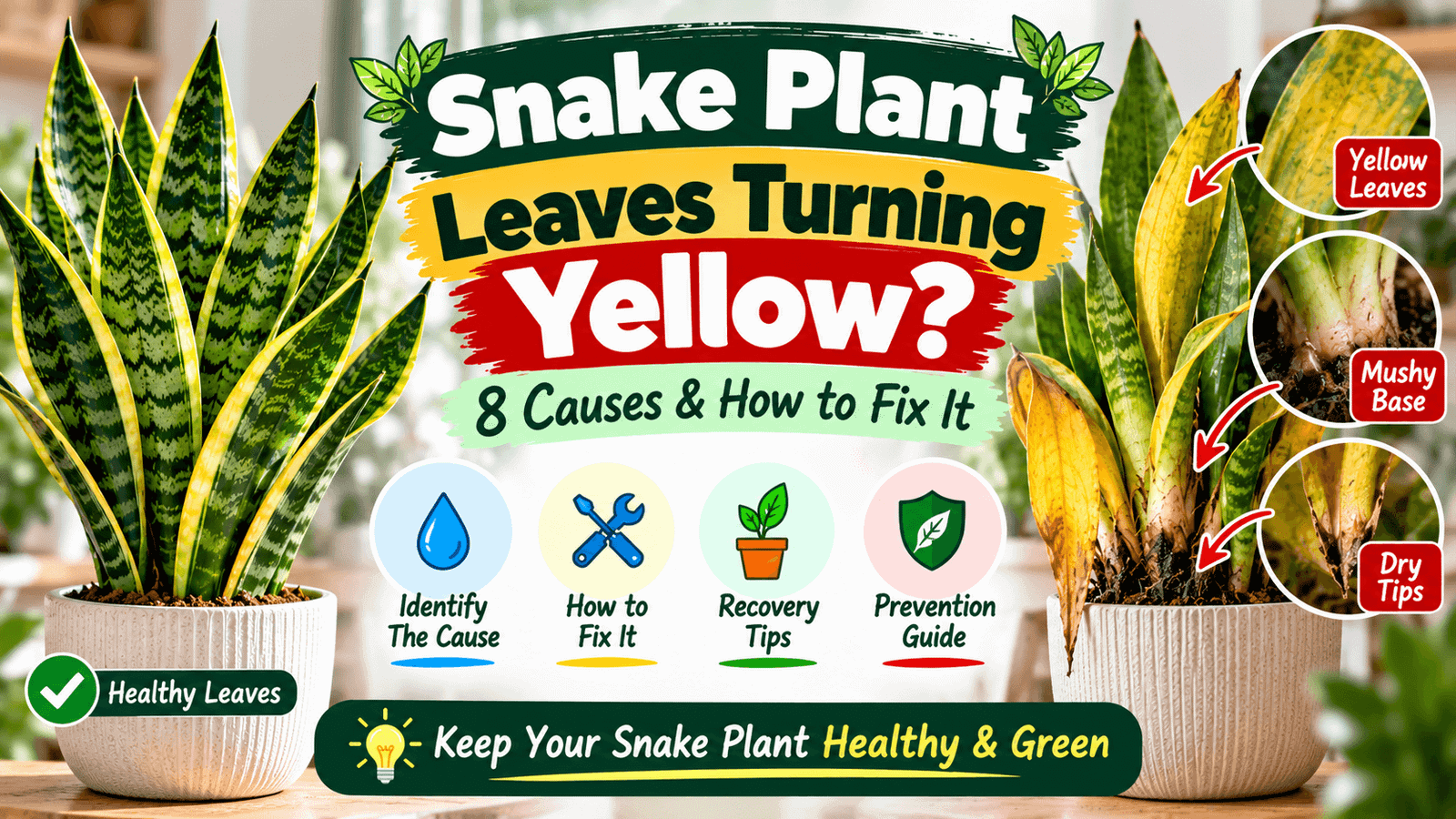
If your snake plant leaves are turning yellow, do not automatically reach for the watering can. Yellowing is a symptom rather than a diagnosis. Check the soil moisture, leaf texture, location of the yellowing, root condition, light exposure and recent environmental changes before deciding how to fix the plant.
Why Are My Snake Plant Leaves Turning Yellow?
Snake plant (Dracaena trifasciata, formerly Sansevieria trifasciata) has thick, fleshy leaves and is generally tolerant of dry indoor conditions. That durability can make yellow foliage confusing because several very different problems can produce a similar color change.
The most useful question is therefore not simply “Why is this leaf yellow?” Instead ask: Where did the yellowing begin, what does the leaf feel like, how wet is the soil, and what changed recently?
How Can You Quickly Diagnose Yellow Snake Plant Leaves?
30-Second Yellow Leaf Check
What Are the Main Causes of Snake Plant Leaves Turning Yellow?
1Overwatering or Soil Staying Wet Too Long
Snake plants should not remain continuously wet. NC State Extension recommends well-drained soil, careful watering and allowing the soil to dry between waterings, while Penn State warns that snake plants can be killed by overwatering.
How to identify overwatering
- The potting mix remains wet for a long time after watering.
- Lower leaves may begin turning yellow.
- Affected foliage may feel softer than healthy leaves.
- The container may drain poorly or remain in collected water.
How to fix overwatering
Stop watering automatically and allow the root zone to dry appropriately. Confirm that the pot has working drainage holes and that excess water is not trapped in a saucer or decorative outer pot.
Then use our How Often to Water a Snake Plant guide to reset your watering routine.
2Root Rot
Root rot is a more serious possibility when yellowing occurs together with prolonged wetness and deteriorating root or rhizome tissue. NC State and Penn State both identify root rot associated with overwatering as a snake plant problem.
How to identify root rot
- Yellow foliage is soft or collapsing.
- The leaf base may become mushy.
- The plant may feel unstable in the pot.
- Roots or rhizomes may be dark, soft or deteriorating.
- Wet media may develop an unpleasant decay smell.
How to fix root rot
Remove the plant from persistently wet media if inspection is warranted, identify firm viable tissue, remove clearly rotten tissue with clean tools, and correct the root environment with fresh, fast-draining media and effective drainage.
Do not duplicate the entire rescue process here. Follow our dedicated Snake Plant Root Rot: Signs, Treatment & How to Save It guide.
3Prolonged Underwatering
Snake plants tolerate drought better than many houseplants, but drought tolerance does not mean they require no water. A plant left dry for an extended period can eventually lose firmness and show stress.
How to identify severe dryness
- The growing medium is thoroughly dry.
- The pot may feel unusually light.
- Leaves may appear wrinkled, thinner or less firm.
- Dry or crispy tissue is more suggestive than a mushy base.
How to fix underwatering
If the root system is healthy and the potting mix is genuinely dry, water thoroughly and let excess water drain. Do not compensate for a long dry period by keeping the soil constantly wet afterward.
4Too Much Direct Sun or an Unsuitable Light Change
Snake plants tolerate a broad range of indoor light. Penn State says they enjoy bright indirect light and tolerate low-light areas, but direct sun can burn the leaves. University of Minnesota also lists snake plant among low-light indoor plants.
How to identify light-related yellowing
- Fading or bleaching is concentrated on the most exposed foliage.
- Discoloration appeared after moving the plant to stronger light.
- Yellow or pale areas may later develop dry brown damage.
- The shaded side of the plant may remain comparatively normal.
How to fix the light problem
Move a suddenly overexposed plant away from harsh direct sun and provide suitable indirect light. Make major light changes gradually rather than moving a shade-grown plant immediately into intense sun.
5Temperature Stress
Sudden cold exposure or unfavorable environmental changes can damage foliage. NC State notes that snake plant tolerates cool temperatures around 50°F (10°C), but that lower tolerance should not be treated as an ideal growth target.
How to identify temperature stress
- Yellowing appeared after a sudden cold event.
- The plant sits beside a cold window, draft or strong air vent.
- Damage appeared soon after a major location change.
- Wet soil and cold conditions occurred together.
How to fix temperature stress
Move the plant to a more stable indoor environment away from damaging cold drafts and avoid keeping the root zone unnecessarily wet during cooler, slower-growth conditions.
6Mealybugs or Spider Mites
Snake plants are generally tough, but NC State and Penn State both recommend monitoring for mealybugs and spider mites. Pest feeding can produce discoloration that may initially look like a general care problem.
How to identify pest-related yellowing
- Fine stippling or small pale/yellow marks appear on foliage.
- Fine webbing may suggest spider mites.
- White cottony material may indicate mealybugs.
- The discoloration occurs with visible pest evidence rather than only wet soil.
What to do if you find pests
Separate the affected plant from nearby houseplants while you identify the pest. Inspect both sides of the leaves and protected areas near leaf bases. Choose a control method specifically appropriate for the identified pest and follow its label directions.
7Fertilizer or Salt Problems
Snake plants are not heavy feeders. Penn State recommends an all-purpose fertilizer at half strength during active growth for a more robust plant. Applying more fertilizer than the plant can use does not compensate for poor light, unhealthy roots or incorrect watering.
How to investigate fertilizer-related yellowing
- Symptoms began after a recent heavy fertilizer application.
- Leaf tips or margins are also damaged.
- Visible mineral accumulation is present around the soil or pot.
- Watering, roots and light do not explain the pattern well.
How to correct the problem
Pause unnecessary feeding while the plant is stressed. Review how much fertilizer was applied and whether salts are accumulating in the growing medium. Resume light feeding only when the plant is healthy and actively growing.
8Natural Aging of an Older Leaf
Not every yellow leaf signals a care failure. An older outer leaf can eventually decline while the rest of the snake plant remains healthy and continues producing normal growth.
How to recognize normal aging
- Only one or a small number of the oldest outer leaves are affected.
- The rest of the plant remains firm and healthy.
- New growth looks normal.
- There is no evidence of wet-soil damage, root rot or pests.
What to do with an old yellow leaf
If a leaf is fully declining or damaged, it can be removed cleanly near the soil level. Penn State specifically recommends cutting a damaged snake plant leaf off at soil level.
What Does the Yellowing Pattern Tell You?
| Yellowing Pattern | Check First | Possible Explanation |
|---|---|---|
| Soft yellow lower leaves | Soil moisture + drainage | Overwatering or developing root problems |
| Yellow + mushy base | Roots and rhizome | Possible root/rhizome rot |
| Yellow + dry/wrinkled | Very dry root zone | Prolonged underwatering |
| Pale/bleached exposed side | Recent direct sun | Light stress or sun damage |
| Yellow speckles | Leaf surfaces | Possible pest feeding |
| One old outer leaf | Rest of plant | Possible natural aging |
| Yellow after cold exposure | Recent temperature history | Temperature stress |
| Yellowing after heavy feeding | Fertilizer history | Possible fertilizer/salt stress |
Can Yellow Snake Plant Leaves Turn Green Again?
Do not judge recovery only by the appearance of an already damaged leaf. Instead, watch whether yellowing stops spreading, the plant remains firm, the root zone returns to appropriate moisture conditions, and healthy new growth eventually develops.
Should You Cut Yellow Leaves Off a Snake Plant?
If only a small cosmetic area is affected and the leaf remains firm, removal is not automatically urgent. If the base is mushy or decaying, however, investigate the roots and rhizome rather than treating the problem as cosmetic.
How Do You Fix a Snake Plant With Yellow Leaves?
Check the Soil
Determine whether the root zone is wet, appropriately dry or severely dry before adding water.
Feel the Yellow Leaf
Soft and mushy tissue suggests a different problem from dry, wrinkled or crispy tissue.
Inspect the Base and Roots if Needed
If the plant is soft, unstable or sitting in persistently wet media, check for root and rhizome deterioration.
Review Light and Temperature
Ask whether the plant was recently moved, exposed to strong direct sun, chilled by a draft or placed near an air vent.
Inspect for Pests
Look closely for webbing, stippling, cottony material or visible insects before assuming the problem is nutritional.
Correct One Confirmed Cause
Adjust the factor that best matches the evidence instead of making multiple unnecessary changes at the same time.
How Do You Prevent Snake Plant Leaves From Turning Yellow?
Check Before Watering
Let actual soil conditions guide watering rather than a rigid calendar.
Use Good Drainage
Pair freely draining soil with a container that lets excess water escape.
Provide Suitable Light
Bright indirect light works well, although snake plants tolerate lower light.
Avoid Sudden Stress
Protect the plant from abrupt cold exposure and extreme environmental changes.
Inspect Regularly
Catch pests or soft tissue before a small issue becomes a larger problem.
Feed Lightly
Fertilize a healthy actively growing plant rather than using fertilizer as medicine.
Frequently Asked Questions About Yellow Snake Plant Leaves
What is the most common reason snake plant leaves turn yellow?
Excess moisture is one of the first conditions to investigate. Snake plants need well-drained soil and should be allowed to dry between waterings. Persistently wet conditions can eventually lead to root rot.
Why is my snake plant turning yellow even though the soil is dry?
If the soil is genuinely dry, inspect leaf texture and review how long the plant has been dry. Also consider recent sun exposure, temperature stress, pests, fertilizer history and natural aging rather than assuming every yellow leaf is caused by overwatering.
Why are my snake plant leaves yellow and soft?
Soft yellow foliage combined with wet soil can indicate excess moisture. If the leaf base is mushy or the plant is unstable, inspect the roots and rhizome for possible rot.
Why are the bottom leaves on my snake plant turning yellow?
Check whether the lower leaves are soft and whether the soil remains wet, because moisture problems often affect lower tissue. If only one old outer leaf is slowly declining while the rest of the plant is healthy, natural aging is also possible.
Can too much sunlight turn snake plant leaves yellow?
Strong direct sunlight can burn snake plant foliage. Pale or bleached damage concentrated on the most exposed side, particularly after a sudden move into stronger light, suggests light stress.
Can low light cause yellow snake plant leaves?
Snake plants tolerate low light. However, a plant in low light often uses water more slowly, so frequent watering in a dim location can keep the root zone wet for too long and indirectly contribute to yellowing.
Should I remove a yellow snake plant leaf?
A fully yellow, badly damaged or decaying leaf can be removed cleanly near soil level. However, removing the leaf is cosmetic unless you also identify and correct the reason it became yellow.
Will a yellow snake plant leaf turn green again?
Do not expect a substantially yellowed leaf to regain its original healthy appearance. Focus on stopping the underlying stress and protecting healthy foliage and future growth.
The Bottom Line
When snake plant leaves are turning yellow, the best response is diagnosis—not guesswork. Begin with the soil and leaf texture, then look at the base, roots, light, temperature, pests and recent fertilizer history.
Soft yellow foliage in persistently wet soil deserves immediate attention because snake plants are particularly vulnerable to overwatering and root rot. Dry wrinkled leaves, bleached sun-facing patches, pest stippling and a single aging outer leaf tell different stories and need different responses.
Remember the simplest rule: identify the pattern first, confirm the likely cause, then make the smallest useful correction.
Authoritative Sources & Further Reading
NC State Extension: Dracaena trifasciata — Snake Plant
Penn State Extension: Snake Plant: A Forgiving, Low-Maintenance Houseplant
University of Minnesota Extension: Lighting for Indoor Plants