Snake Plant Root Rot: Signs, Treatment & How to Save It
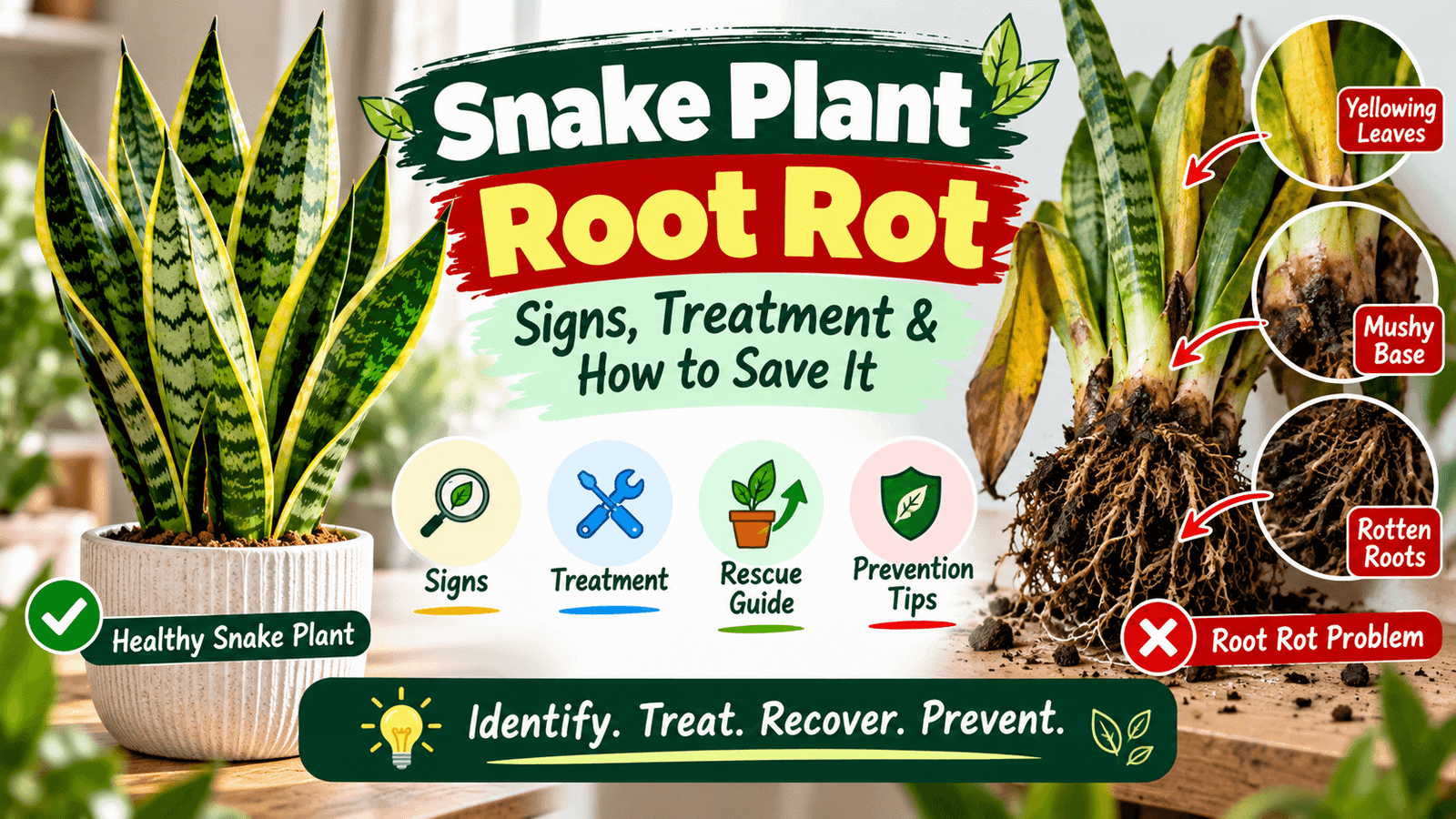
Snake plant root rot usually develops when roots and rhizomes remain in overly wet, poorly aerated conditions. Yellow or drooping leaves alone do not confirm root rot. The clearest diagnosis comes from inspecting the root system for soft, dark, deteriorating tissue and checking whether the growing medium has remained excessively wet.
What Is Snake Plant Root Rot?
Snake plants (Dracaena trifasciata, formerly Sansevieria trifasciata) are adapted to tolerate periods of dry soil. Their fleshy leaves and underground rhizomes store resources, so keeping the root zone continuously wet is much more dangerous than allowing appropriate dry-down between waterings.
NC State Extension specifically warns not to overwater snake plants because their roots can rot, while Penn State identifies root rot from overwatering as a common problem.
What Does Snake Plant Root Rot Look Like?
Soft Yellow Leaves
Yellowing combined with soft tissue and wet soil is more concerning than yellow color alone.
Mushy Leaf Base
Soft or collapsing tissue where the leaves meet the soil can indicate advanced moisture-related damage.
Unpleasant Smell
A sour or rotten smell from wet soil or roots is a reason to inspect the root system.
Drooping or Collapse
Damaged roots may no longer support the plant effectively even while the soil remains wet.
Dark Soft Roots
Roots that are dark, soft, mushy or deteriorating are more suspicious than firm intact roots.
Soil Stays Wet
A growing medium that remains saturated for unusually long periods creates an unfavorable root environment.
How Do You Know If a Snake Plant Has Root Rot?
✓ Healthier Tissue
- Firm rather than mushy
- Roots remain structurally intact
- Rhizome feels solid
- Leaf bases remain firm
- No obvious decay odor
⚠ Suspected Rot
- Soft or mushy roots
- Dark deteriorating tissue
- Soft or collapsing rhizome
- Mushy leaf bases
- Unpleasant decay odor may occur
Root Rot vs. Underwatering: How Can You Tell the Difference?
| Clue | Root Rot / Excess Moisture | Underwatering |
|---|---|---|
| Soil | Often wet for too long | Very dry |
| Leaf Texture | May become soft or mushy | May become dry, wrinkled or less firm |
| Roots | Soft, dark or deteriorating tissue may occur | Not automatically rotten |
| Leaf Base | Can become soft and collapse | Usually not mushy from simple dryness |
| Response | Do not automatically add more water | Correct watering after confirming dryness |
For a complete watering diagnosis, use our Snake Plant Watering Guide .
What Causes Root Rot in a Snake Plant?
1. Watering Before the Soil Has Dried
Frequent watering can keep the root zone continuously moist. Snake plants should be allowed to dry between waterings rather than being kept constantly damp.
2. Poorly Draining Soil
Dense potting media can retain water for longer than the roots need. RHS recommends a free-draining cactus-style compost for sansevierias and warns that damp conditions encourage root rot.
See our Best Soil for Snake Plant guide for a practical fast-draining mix.
3. A Pot Without Effective Drainage
A container should allow excess irrigation water to escape. Even good soil becomes risky if water is trapped around the root system.
4. Leaving the Pot in Standing Water
Water collected inside a saucer or decorative outer pot can keep the lower root zone wet after irrigation.
5. Low Light Combined With Frequent Watering
Snake plants tolerate lower light, but plants in dimmer conditions generally use water more slowly. A watering routine that works in a bright location may therefore be excessive in a darker room.
6. An Oversized Pot
A very large volume of unused potting media can take longer to dry, especially when the plant has a relatively small root system.
7. Cool Conditions + Wet Soil
Cooler conditions can slow water use and soil drying. This makes frequent watering particularly risky during lower-light, cooler periods.
How Do You Save a Snake Plant From Root Rot?
Stop Unnecessary Watering
If the potting mix is already wet and the plant shows rot symptoms, adding more water will not correct the underlying problem.
Remove the Plant From the Pot
Carefully slide the plant out so you can inspect the roots and thick underground rhizomes.
Remove Wet Old Potting Mix
Gently clear enough old growing medium away to see which roots and rhizome sections are firm and which are deteriorating.
Inspect Every Section
Look for firm viable tissue versus soft, mushy, dark or collapsing areas. Do not remove healthy tissue simply because a leaf above it looks imperfect.
Trim Clearly Rotten Tissue
Use clean, sharp cutting tools to remove severely decayed roots or rhizome portions. Cut back to firm viable tissue where possible.
Choose an Appropriate Pot
Use a clean container with working drainage holes. Avoid moving a severely reduced root system into an unnecessarily large pot.
Repot in Fresh Fast-Draining Mix
Use fresh, porous potting media that balances moisture with good aeration and drainage.
Reset the Watering Routine
After treatment, base future watering on the condition of the potting mix and the reduced root system—not on the old calendar that contributed to the problem.
Should You Use Hydrogen Peroxide or Cinnamon for Snake Plant Root Rot?
Many online root-rot guides recommend household treatments as though they are mandatory. PlantySolve does not recommend adding an unnecessary treatment when the fundamental environmental problem has not first been corrected.
How Do You Care for a Snake Plant After Root Rot?
Provide Useful Light
Bright indirect light provides a good recovery environment without forcing a sudden extreme light change.
Watch Moisture Carefully
Allow appropriate dry-down and make sure excess irrigation water can leave the container.
Avoid Cold Stress
Keep the recovering plant away from cold drafts and unfavorable cold-and-wet conditions.
Watch New Growth
Firm stable foliage and eventually healthy new growth are more useful recovery signs than expecting damaged old leaves to become perfect.
For the complete long-term routine, continue with our Snake Plant Care Guide .
Can You Propagate a Snake Plant With Severe Root Rot?
University of Maine and Iowa State Extension both document snake plant propagation from leaf sections, while Penn State recommends division for clump-forming snake plants.
See the full process here: How to Propagate Snake Plant: 4 Easy Methods .
How Do You Prevent Snake Plant Root Rot?
Check Before Watering
Do not water simply because a calendar says it is watering day.
Use Drainage
Make sure excess water can leave both the pot and any outer container.
Use Airy Soil
Avoid dense mixes that remain saturated for prolonged periods.
Consider Light
Plants in lower light may dry more slowly and therefore need less frequent watering.
Adjust in Winter
Cooler, lower-light conditions commonly reduce water use.
Avoid Huge Pots
Use a container reasonably matched to the root system rather than a large volume of slow-drying soil.
What Mistakes Make Snake Plant Root Rot Worse?
| Mistake | Why It Is a Problem | Better Approach |
|---|---|---|
| Watering yellow leaves immediately | Yellowing does not prove drought | Check soil and roots first |
| Keeping rotten roots | Severely decayed tissue will not become healthy again | Remove clearly rotten portions |
| Using the same wet soil | The original moisture problem remains | Use suitable fresh media |
| Repotting into a huge container | Extra media can remain wet longer | Match pot reasonably to remaining roots |
| Fertilizing immediately | Does not correct damaged roots | Stabilize roots first |
| Following a rigid watering calendar | Drying speed changes with conditions | Check actual moisture before watering |
Frequently Asked Questions About Snake Plant Root Rot
Can a snake plant recover from root rot?
Yes, recovery may be possible if enough firm healthy root, rhizome or leaf tissue remains. Remove clearly rotten material, correct the wet root-zone conditions and repot viable tissue in suitable fresh media.
What do rotten snake plant roots look like?
Suspect roots may be dark, soft, mushy or structurally deteriorated. Healthy tissue should feel firm. Inspect the rhizome and leaf bases as well as the fine roots.
Why does my snake plant have root rot?
The most common underlying conditions are excessive watering, slow- draining soil and poor drainage. Low light, cool conditions or an oversized pot can further slow soil drying.
Should I cut off rotten snake plant roots?
Clearly soft and decomposed roots should be removed with clean, sharp tools while preserving firm viable tissue.
Should I water a snake plant immediately after treating root rot?
Avoid using an automatic rule. A recently treated plant has fewer functioning roots, so future watering should be based on the moisture level of the new mix, remaining root system and environmental conditions rather than the old schedule.
Can I reuse the old soil after root rot?
Fresh suitable potting media is preferable during a root-rot rescue because it lets you reset the root environment and correct drainage or water-retention problems associated with the previous setup.
Can a snake plant survive with no roots?
The original rooted plant may not survive after complete root and rhizome loss, but healthy firm leaf material can potentially be used for propagation.
Does a yellow snake plant leaf always mean root rot?
No. Yellow leaves can have several causes. Root rot becomes more likely when yellowing occurs together with wet soil, soft tissue, mushy roots, a collapsing base or other evidence of root deterioration.
The Bottom Line
The key to dealing with snake plant root rot is confirmation rather than guesswork. Do not diagnose the plant from leaf color alone. Check whether the soil has remained wet, inspect the leaf bases, and look directly at the roots and rhizomes when symptoms justify it.
If firm viable tissue remains, remove clearly rotten portions, reset the plant in fresh fast-draining media with effective drainage, and correct the watering conditions that caused the problem.
For prevention, remember one simple system: let the root zone dry appropriately, provide drainage, and check the soil before reaching for the watering can.
Authoritative Sources & Further Reading
NC State Extension: Snake Plant — Dracaena trifasciata
Penn State Extension: Snake Plant: A Forgiving, Low-Maintenance Houseplant
Royal Horticultural Society: How to Grow Sansevierias
Iowa State University Extension: Propagating Houseplants by Leaf Section Cuttings
University of Maine Cooperative Extension: Creating New Plants from Old Plants