
How to Grow Tomatoes in Pots: Beginner-Friendly Guide (2026)
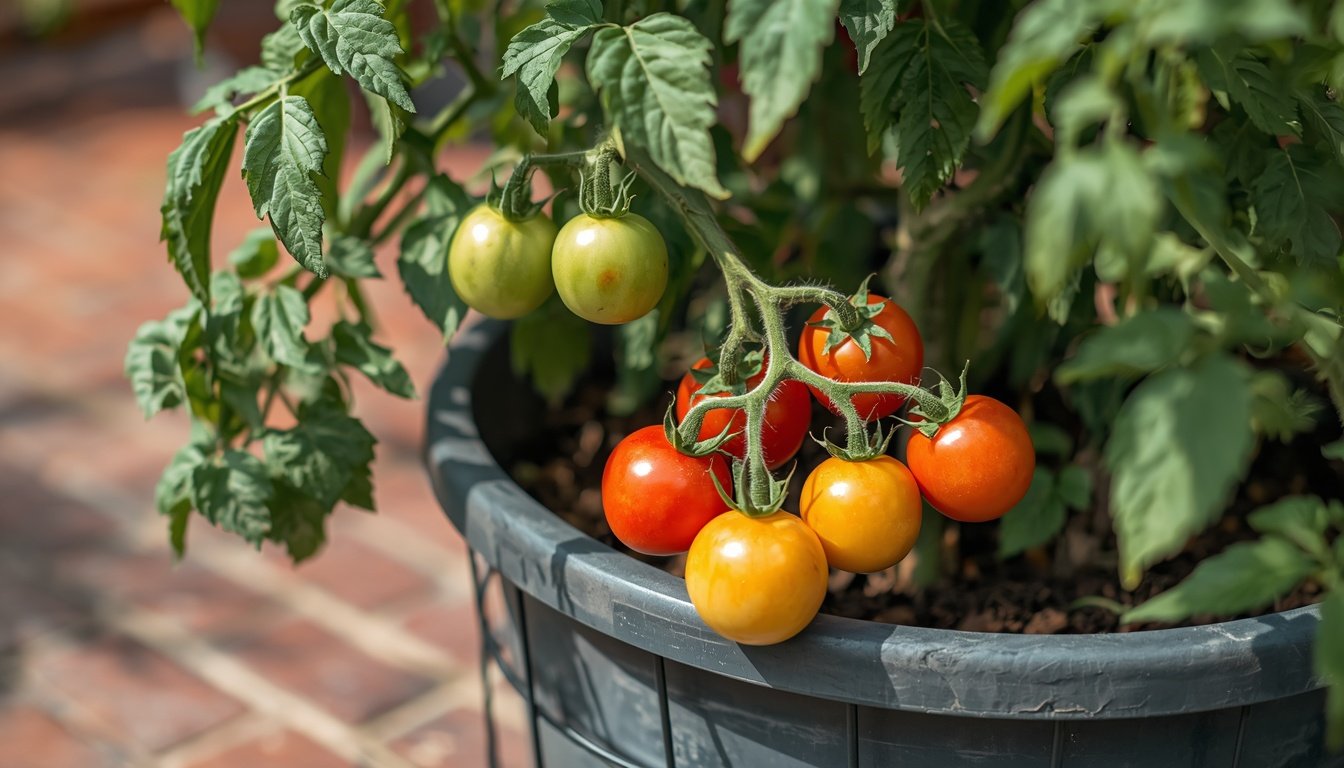
Learning how to grow tomatoes in pots comes down to a few early decisions: a compact variety, a large enough container, fresh potting mix, strong sunlight, and steady watering. Get those right and a balcony, patio, or driveway can produce a solid harvest.
Quick Answer (How to Grow Tomatoes in Pots)
To grow tomatoes in pots, choose a compact variety, plant it in a 10-gallon pot with drainage holes, filled with quality potting mix. Give it 6 to 8 hours of direct sun, water deeply whenever the top inch or two feels dry, feed regularly, and add a support at planting.
Quick reference
| Factor | What potted tomatoes need |
|---|---|
| Sunlight | 6 hours minimum, 8 or more is better |
| Pot size | 5 gallons is a minimum for compact types, 10 to 20 gallons is better |
| Growing medium | Fresh potting mix, never garden soil |
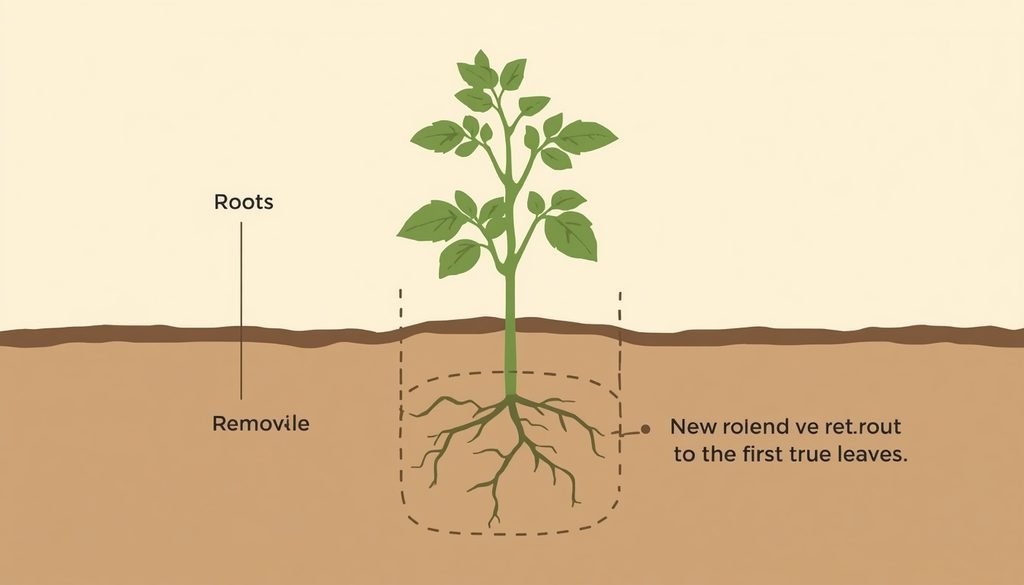
| Planting depth | Bury the stem up to the first true leaves |
| Watering | Deeply, when the top inch or two is dry, often daily in hot weather |
| Feeding | Every 1 to 2 weeks, or follow the slow-release label |
| Support | Cage or stake installed at planting |
Choose the Right Tomato for a Pot
Tomatoes are grouped by growth habit, and this choice affects everything else.
- Determinate tomatoes grow to a set size, usually 3 to 4 feet, and ripen most fruit within a few weeks.
- Indeterminate tomatoes keep growing and fruiting until frost, often reaching 6 feet or more.
- Dwarf or patio tomatoes are compact, sturdy plants bred for small spaces.
| Tomato type | Container suitability | Support needs |
|---|---|---|
| Determinate (many Roma and bush types) | Best for beginners | Small cage or single stake |
| Dwarf and patio types | Very good, often with full-size fruit | Short stake or cage |
| Cherry types | Good, but check whether the vine is determinate or indeterminate | Depends on the vine |
| Indeterminate (many beefsteaks) | Possible with a very large pot and strong support | Tall cage, trellis, or stake, fixed to something solid |
Any tomato can grow in a pot, but compact types are the easiest. If you want a large indeterminate variety, be ready for a bigger pot, a tall support, and regular pruning. Check the label for days to maturity too. In a short season, an early variety is safer.
Choose the Right Pot: Size, Depth, and Material
Pot size is the decision beginners most often get wrong. Tomato roots need room, and a bigger pot holds more water, which makes moisture steadier.
Sources disagree on size because they answer different questions: the smallest pot that works versus the size that gives the best harvest.
| Tomato type | Minimum | Better | Typical result |
|---|---|---|---|
| Cherry or dwarf | About 2 to 5 gallons (10 to 12 inches wide) | 5 to 10 gallons | Works, but needs frequent watering |
| Determinate and patio | 5 gallons | 10 to 15 gallons | Good yield with less watering stress |
| Indeterminate | 15 gallons | About 20 gallons (24 inches wide) | Best growth and yield |
Plant one tomato per pot, and make sure the pot has drainage holes. If a pot has none, drill several. Iowa State Extension notes that any container works if it drains, and that if you use wood you should avoid treated lumber.
Material changes how often you water:
- Plastic and glazed ceramic hold moisture longer than terra cotta.
- Fabric grow bags let roots breathe and drain well, but they usually dry out faster.
- Dark pots absorb heat. In hot climates, shade the pot or choose a lighter color.
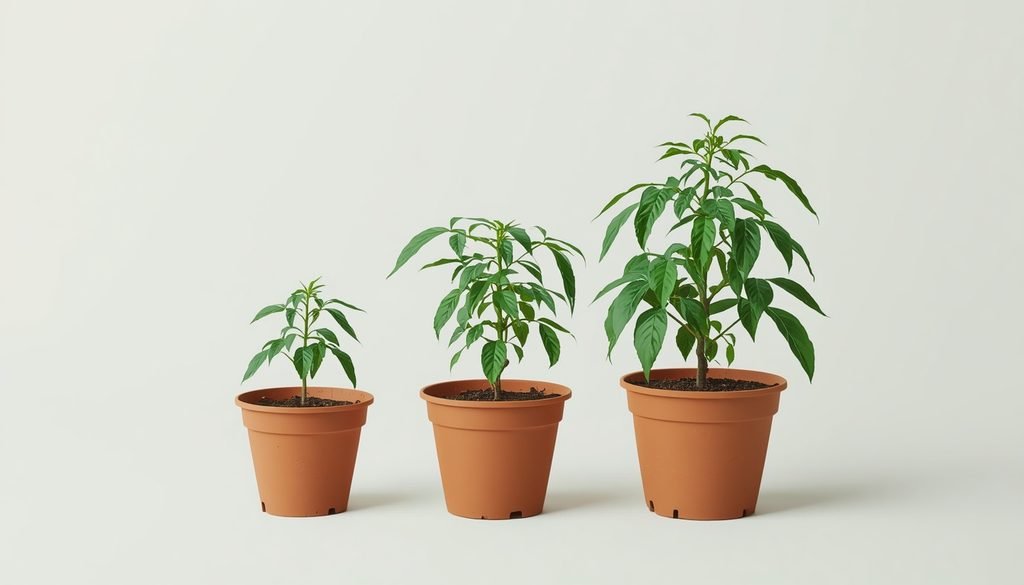
Place the pot where you want it before filling it. A large container is very heavy once it holds wet mix.
Use the Right Potting Mix
Use a fresh, loose potting mix. Garden soil is heavy and compacts in containers, which limits air and drainage. It can also carry disease organisms. A quality soilless mix drains well but still holds moisture, is lightweight, and starts free of weed seeds and soil pathogens.
A layer of gravel at the bottom of the pot does not improve drainage. Good drainage holes and a mix that drains well do.
How to Plant Tomatoes in Pots, Step by Step
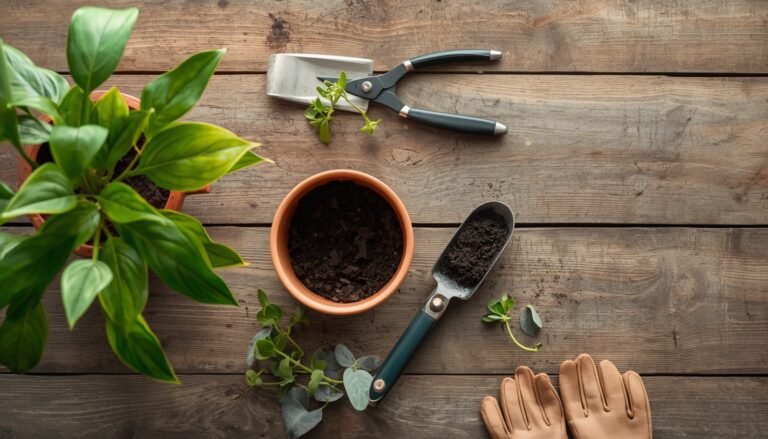
- Fill the pot partway with moistened potting mix.
- Remove the lowest leaves from the transplant, leaving two or three sets at the top.
- Loosen circling roots gently if the plant is root bound (roots wrapped in a tight ring).
- Set the plant deep. Tomatoes grow new roots along buried stem, so bury the stem up to the first true leaves.
- Fill in with mix, leaving about an inch below the rim for water and mulch.
- Insert the support now. Adding it later can damage roots.
- Water thoroughly until water runs from the bottom.
- Add 1 to 2 inches of mulch such as straw, shredded bark, or chopped leaves, keeping it off the stem.
Seeds or transplants
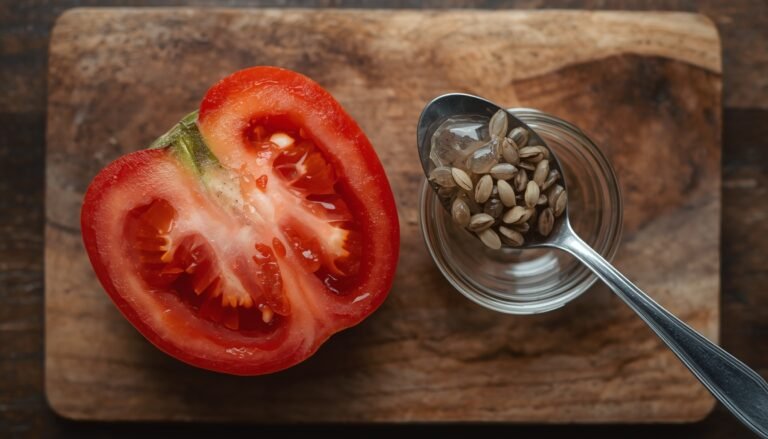
Beginners usually have an easier time with nursery transplants. Seeds give you more variety choices but need more time and equipment. If you start seeds, sow them indoors about 6 to 8 weeks before your last frost date, about 1/4 inch deep, in warm conditions (70°F or above), and give them strong light. Move seedlings to larger pots as they grow.
When to plant outside
Cold slows tomatoes and can damage young plants. Sources give different safe minimums, from nights above 45°F to nights above 55°F. A practical rule is to wait until after your last frost and until nights stay consistently above about 50 to 55°F. With protection such as a water wall or frost cover, you can plant somewhat earlier.
Sunlight and Placement
Potted tomatoes need at least 6 hours of direct sun, and 8 or more hours generally gives better yields. Too little light causes tall, weak plants and few flowers.
In hot climates, choose a spot with strong morning sun and some afternoon shade. Fruit set and color can suffer when temperatures stay above about 85 to 90°F. Concrete and asphalt reflect heat, so grouping pots or shading the pot sides helps. Shelter from strong wind also protects tall plants and stops pots from tipping.
Watering Tomatoes in Pots
Water deeply, then wait until the top inch or two of the mix feels dry. Do not follow a fixed schedule, because the right frequency depends on pot size, material, weather, and plant size.
Sources differ on how deep to check. Some say the top inch, others 3 to 4 inches. Check about 2 inches down in small pots or hot weather, and a little deeper in very large pots.
Iowa State Extension notes that plants in containers dry out quickly from sun and wind, and some may need daily watering. It also warns that letting the soil dry out completely can cause plants to drop flowers and fruit, while overwatering slowly harms roots because they cannot get enough oxygen.
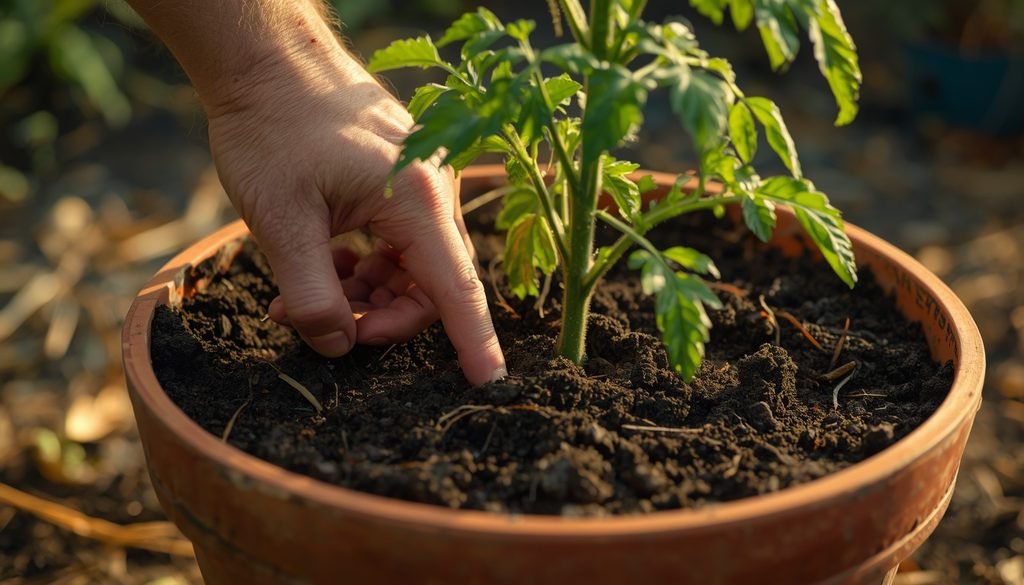
To water well:
- Water the mix, not the leaves. Wet leaves encourage disease.
- Keep going until water drains from the bottom.
- Water in the morning when possible.
- Use mulch to slow evaporation.
| Symptom | Possible cause | What to do |
|---|---|---|
| Wilting, dry, light pot | Underwatering | Water deeply, then check more often |
| Wilting, wet mix | Overwatering or poor drainage | Stop watering, check drainage holes |
| Yellow lower leaves, soggy mix | Overwatering | Let the top layer dry, improve drainage |
| Cracked fruit | Uneven watering | Water more evenly, mulch |
| Dark sunken spot on fruit bottom | Uneven watering affecting calcium supply | See the troubleshooting table |
Feeding Tomatoes in Pots
Nutrients wash out of pots quickly, so container tomatoes need regular feeding. Iowa State Extension recommends a soluble fertilizer such as 15-30-15 or 20-20-20 every week or two, and notes that if your mix contains slow-release fertilizer you may not need to start feeding until mid-summer. Proven Winners suggests a balanced 10-10-10 at planting, then a water-soluble feed every 1 to 2 weeks once fruit sets.
Follow the label and avoid heavy nitrogen once the plant is growing well. Too much nitrogen produces leaves at the expense of flowers and fruit. Complex routines involving aspirin, eggshells, or fish meal are not required in the extension guidance I reviewed, so skip them if you are a beginner. See the best fertilizer for tomatoes for a fuller comparison.
Support and Pruning
Install support when you plant. A cage works well for determinate plants, and indeterminate types need a tall stake, trellis, or sturdy cage. Thin wire cones are often too small for large plants. In windy spots, tie the support to a rail, wall, or fence so the whole pot does not tip.
Pruning: Suckers are the shoots that grow between the main stem and a branch. Iowa State Extension suggests pruning staked plants to one or two stems. Determinate types generally need no pruning, though removing lower leaves that touch the mix can reduce disease. Some experienced gardeners prune less, so treat this as a choice, not a rule. A step by step method is in how to prune tomato plants, and support options are covered in how to stake and trellis tomatoes.
Growing Tomatoes in Pots Indoors
Tomatoes can grow indoors, but light is the limit. A bright window is often not enough for fruiting. Most indoor growers rely on a full spectrum grow light, commonly for 12 to 16 hours a day. Choose dwarf or micro varieties, use a container with drainage and a saucer, and give the plant airflow. Indoor flowers may need help with pollination, and gently shaking the plant or tapping the flower clusters can help. See growing tomatoes indoors for a full guide.
Troubleshooting Potted Tomatoes
| Symptom | Likely causes | What to check | What to do |
|---|---|---|---|
| Yellow leaves | Uneven watering, poor drainage, low nutrients, leaf disease | Mix moisture, drainage, feeding history, spotting | Fix watering first, then feed, remove badly affected leaves |
| Wilting | Underwatering, overwatering, heat | Mix moisture, time of day, temperature | Water if dry, shade in heat, improve drainage if soggy |
| Blossom end rot (dark sunken spot on fruit bottom) | Uneven moisture, limited calcium supply, rapid growth | Watering pattern, fertilizer type, mix | Water steadily, mulch, remove affected fruit, consider a calcium source in the mix |
| Flowers falling off | Drying out, heat, cold, low light | Mix moisture, temperature swings | Keep moisture steady, shade in heat |
| Slow growth | Cold, small pot, low light, low nutrients | Pot size, sun hours, nights below 50°F | Move to more sun, feed, upgrade pot next season |
| Cracked tomatoes | Uneven watering | Recent rain or dry spells | Water evenly, pick nearly ripe fruit before heavy rain |
| Curling leaves | Heat, watering stress, sometimes other stresses | Weather, mix moisture | Fix watering, shade in heat, watch new growth |
| Small fruit | Small pot, low light, heat | Pot size, sun hours | Feed, water steadily, more sun or larger pot |
| No fruit | Low light, too much nitrogen, heat, poor pollination | Sun hours, fertilizer, temperature | More sun, reduce nitrogen, shake flowers |
| Leaf spots or spreading blight | Fungal disease | Wet leaves, crowding | Remove affected leaves, water at the base, improve airflow |
| Chewed leaves, dark droppings | Hornworms | Undersides of leaves | Pick off by hand |
| Sticky curled leaves | Aphids | Undersides of leaves | Rinse off with water, check regularly |
On blossom end rot, extension sources stress that containers dry out quickly, so potted plants are more likely to develop it without consistent watering. Read more in blossom end rot in tomatoes. illinoismortonarb.
Harvesting Tomatoes
Let fruit ripen on the plant for the best flavor. Pick when the whole fruit has an even color and feels slightly soft, not hard. In very hot weather, red types may look yellow or orange, because red pigment forms poorly above about 90°F. Do not refrigerate freshly picked tomatoes, since cold reduces flavor. If heavy rain follows a dry spell, pick nearly ripe fruit early to avoid cracking.
Common Mistakes to Avoid
- Choosing a pot that is too small.
- Using garden soil instead of potting mix.
- Skipping drainage holes.
- Letting the mix dry out completely, then flooding it.
- Placing pots in less than 6 hours of sun.
- Adding support late.
- Overfeeding with nitrogen.
- Crowding pots so leaves stay wet and air cannot move.
Frequently Asked Questions
1. How can I make my tomatoes grow faster?
You cannot force tomatoes, but you can remove what slows them. Give 6 to 8 hours of direct sun, plant deeply, use a large pot, keep moisture consistent, and feed regularly once growth begins. Cold nights and root stress stall growth, while too much nitrogen produces leaves instead of fruit.
2. Should I water my tomato plants every day in pots?
Not always. Water when the top inch or two of mix feels dry, not on a fixed schedule. Small pots in hot, windy weather often need daily watering, while large pots may need it every two to three days. Water until it drains from the bottom, then wait.
3. How much sun do tomatoes need in pots?
Tomatoes need at least 6 hours of direct sun each day, and 8 or more hours usually gives better yields. In very hot climates, choose a spot with morning sun and some afternoon shade. Too little light causes tall, weak plants and few flowers.
4. What is the secret to growing tomatoes?
There is no single secret, but the closest is consistent moisture in a large pot of fresh potting mix in full sun. Most container failures trace back to small pots, uneven watering, or too little light. Fix those three and most other problems become minor.
5. What size pot do tomatoes need?
Aim for 10 to 20 gallons. Compact determinate and dwarf types can manage 5 gallons, and cherry types may produce in about 2 gallons, but yields drop and watering becomes constant. Large indeterminate types do best in 20 gallons or a container about 24 inches wide.
6. Can I grow tomatoes in pots from seeds?
Yes. Start seeds indoors 6 to 8 weeks before the last frost in seed starting mix, about 1/4 inch deep, at 70°F or warmer. Give strong light, then move seedlings to larger pots and plant outside when nights are warm. Beginners often find nursery transplants easier.
7. Can tomatoes grow indoors in pots?
Yes, but only with enough light. A window is often too weak for fruiting, so most indoor tomatoes need a grow light for many hours daily, commonly 12 to 16. Choose dwarf or micro varieties, and shake the flowers gently to help pollination.
8. Why are my potted tomato leaves turning yellow?
Yellow lower leaves usually come from uneven watering, poor drainage, or low nutrients, though disease can also cause it. Check the mix moisture and drainage first. If those are fine, feed the plant and remove affected leaves. Spotting or rapid spread suggests a fungal problem.
9. How deep should I plant tomato seedlings?
Bury the stem up to the first set of true leaves, removing the lower leaves first. Tomatoes grow roots along buried stem, which builds a stronger root system. Keep the mix about an inch below the rim so water does not overflow.
10. Do potted tomatoes need pruning?
Indeterminate types benefit from removing suckers, the shoots between the stem and a branch, to keep plants manageable. Determinate types generally need no pruning, though removing lower leaves that touch the mix helps prevent disease. Avoid stripping a plant heavily at once.
Conclusion
Success comes from a short list: the right variety, a large pot with good drainage, fresh potting mix, 6 or more hours of sun, consistent watering, regular feeding, early support, and a quick daily look for problems. Start with one compact variety and a 10-gallon pot, and you will learn the rhythm quickly. For more step by step gardening guides, explore PlantySolve for practical answers to common plant problems.
If your plant foliage begins turning pale or discolored despite following these container guidelines, you can identify the exact nutrient deficiency or watering error by visiting our detailed guide on troubleshooting yellow leaves on plants. Addressing these early signs will keep your potted crops thriving throughout the growing season.
4 Comments