
Snake Plant Varieties: 15 Beautiful Types & Identification Guide
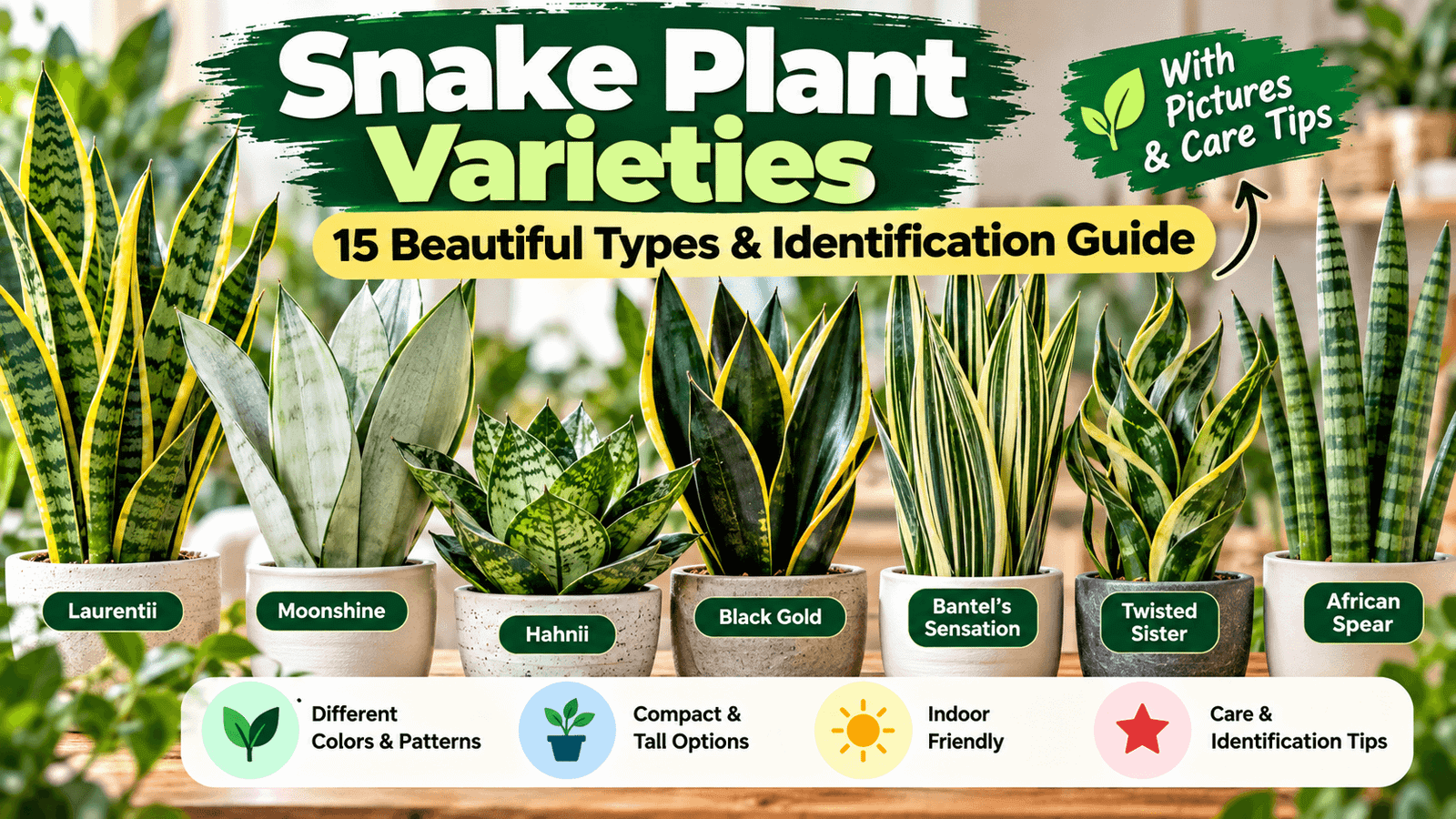
Snake plant varieties range from tall, yellow-edged cultivars such as ‘Laurentii’ to compact bird’s-nest forms, silvery ‘Moonshine’, dark ‘Black Gold’, white-striped ‘Bantel’s Sensation’ and unusual snake plant relatives with cylindrical leaves. The easiest way to choose one is by comparing leaf color, shape, growth habit and the space available in your home.
How Many Types of Snake Plants Are There?
Many familiar snake plants were historically sold under the genus Sansevieria. Modern botanical classification places them within Dracaena, so you may encounter both names on nursery labels, older gardening books and online listings.
For example, the familiar snake plant is now commonly listed as Dracaena trifasciata, although Sansevieria trifasciata remains a widely recognized older name.
Snake Plant Varieties at a Glance
| Variety | Easy ID Feature | Growth Form | Best For |
|---|---|---|---|
| Laurentii | Yellow edges + green banding | Tall upright | Classic floor plant |
| Moonshine | Silvery-gray leaves | Upright | Modern interiors |
| Hahnii | Short bird’s-nest rosette | Dwarf | Desks and shelves |
| Black Gold | Dark green + bright gold edge | Upright | High-contrast foliage |
| Bantel’s Sensation | White vertical stripes | Tall and narrow | Architectural display |
| Futura Superba | Gray-green leaves + yellow margin | Compact upright | Smaller spaces |
| Golden Flame | Yellow-gold foliage pattern | Upright | Bright variegation |
| Whitney | Dark center + pale margins | Compact | Subtle variegation |
| Black Robusta | Dark foliage + silver mottling | Compact/upright | Dark foliage displays |
| Futura Robusta | Dark green + silvery blotches | Compact upright | Indoor décor |
| Silver Queen | Silver-green banding | Upright | Cool-toned foliage |
| Metallica | Gray vertical bands | Upright | Unusual striped foliage |
| Twisted Sister | Twisting yellow-green leaves | Compact | Novelty form |
| Black Jack | Dark foliage + yellow-green margins | Compact | Small high-contrast display |
| African Spear | Round cylindrical leaves | Fan/upright | Sculptural appearance |
15 Beautiful Snake Plant Varieties and Types
Laurentii
This is the classic variegated snake plant. Its upright leaves combine dark and lighter green cross-banding with distinctive yellow margins. It is one of the easiest cultivars to recognize at a glance.
Moonshine
Moonshine stands apart because of its broad, pale silvery-gray to silver-green foliage. Its unusual cool-toned leaves give it a clean, modern appearance that looks very different from yellow-edged cultivars such as Laurentii.
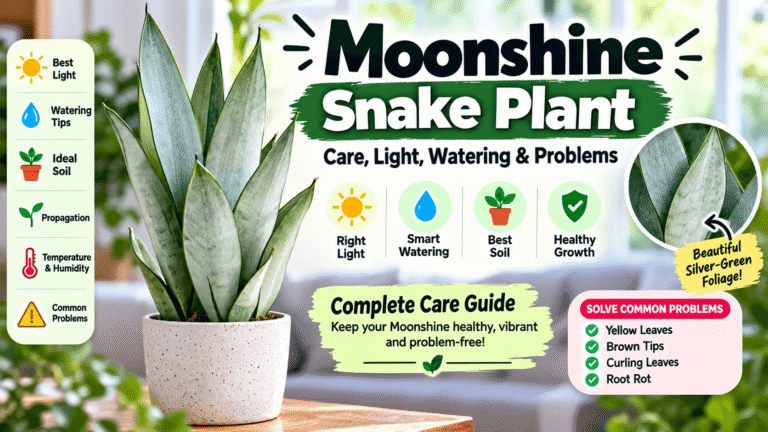
For complete growing instructions, read our Moonshine Snake Plant Care Guide .
Hahnii — Bird’s Nest Snake Plant
Hahnii is dramatically shorter than the classic upright form. Its leaves form a compact, funnel-like rosette, creating the bird’s-nest appearance behind its common name.
NC State describes ‘Hahnii’ as a dwarf form with leaves arranged in a short rosette.
Black Gold
Black Gold offers one of the strongest foliage contrasts in the group. Its very dark green leaves are framed by bright golden-yellow margins, making it a striking choice for modern indoor displays.
Bantel’s Sensation
Most familiar snake plants emphasize horizontal markings. Bantel’s Sensation is different: its narrow leaves carry striking cream-to-white vertical striping, giving the plant a slimmer and more elegant appearance.
Futura Superba
Futura Superba provides a compact alternative to taller yellow-edged snake plants. Its gray-green foliage and yellow margins make it useful when you want classic variegation without the same vertical scale as a large floor specimen.
Golden Flame
Golden Flame is notable for its yellow-gold foliage pattern. Its colorful variegation makes it especially attractive for gardeners who want a brighter snake plant rather than a predominantly dark-green selection.
Whitney
Whitney has a darker central appearance framed by paler green variegation along the margins. It creates a more restrained look than cultivars with vivid yellow edging.
Black Robusta
Black Robusta is a good option for gardeners who prefer deeper foliage colors. Its dark green leaves feature silver-toned mottling rather than the bright golden borders seen on Black Gold.
Futura Robusta
Futura Robusta combines dark green foliage with silvery-green blotching. Its comparatively compact form can work well where a full-height Laurentii would dominate the available space.
Silver Queen
Silver Queen emphasizes cool-toned foliage. Its silver-green leaves and lighter banding give it a softer appearance than yellow-variegated snake plant varieties.
Metallica
Metallica has an unusual striped appearance. Green foliage marked with gray-toned vertical striping gives this cultivar a distinctive pattern among more familiar snake plant varieties.
Twisted Sister
Twisted Sister is easy to distinguish from rigid sword-leaved forms because its foliage twists as it grows. Yellow-green variegation adds even more visual movement.
Black Jack
Black Jack is a compact cultivar with dark green foliage edged by yellow-green margins. It is useful for people who want strong foliage contrast in a relatively small plant.
African Spear / Cylindrical Snake Plant
African spear looks very different from Dracaena trifasciata cultivars because its leaves are cylindrical rather than flat sword-shaped blades. It is frequently marketed alongside other snake plants and is useful when you want a more sculptural silhouette.
How Do I Identify My Snake Plant Variety?
Check the Leaf Color
Look for yellow margins, silver surfaces, very dark centers, white vertical stripes or ordinary green cross-banding.
Check the Leaf Shape
Traditional varieties have flat sword-shaped leaves. Related snake plants may instead have cylindrical spear-like foliage.
Check the Growth Habit
Determine whether the plant forms a tall upright clump, a short rosette or a fan of cylindrical leaves.
Check the Pattern Direction
Horizontal cross-banding is common, while Bantel’s Sensation stands out for conspicuous vertical white striping.
Which Snake Plant Varieties Are Best for Small Spaces?
Which Snake Plant Varieties Are Best as Floor Plants?
Laurentii delivers the familiar green-and-yellow snake plant look. Black Gold creates stronger dark-and-gold contrast, while Bantel’s Sensation provides a narrower appearance with white vertical striping.
Does the Snake Plant Variety Change Its Light Needs?
For authoritative growing information, see NC State Extension’s snake plant profile .
Do All Snake Plant Varieties Need the Same Care?
Water Carefully
Snake plants can develop problems when the root zone remains persistently wet. Check the potting medium before watering again.
Use Draining Soil
Choose a loose potting medium and a container that allows excess water to escape.
Provide Useful Light
Snake plants tolerate different indoor conditions, while brighter indirect light can support stronger growth and attractive variegation.
For the complete moisture routine, read our How Often to Water a Snake Plant guide.
For the root-zone setup, see Best Soil for Snake Plant for potting mix, drainage and DIY soil guidance.
Can Variegated Snake Plant Varieties Lose Their Color When Propagated?
This matters particularly when a cultivar’s identity depends on distinctive yellow, silver or white patterning. Successfully rooting a leaf does not necessarily mean that the new growth will reproduce the parent plant’s exact appearance.
Our How to Propagate Snake Plant guide explains division, pups, soil cuttings and water propagation in detail.
How Do You Choose the Best Snake Plant Variety?
| If You Want… | Consider… | Why |
|---|---|---|
| Classic snake plant | Laurentii | Iconic yellow-edged sword foliage |
| Small desk plant | Hahnii | Dwarf rosette growth |
| Silver foliage | Moonshine | Pale silvery-gray appearance |
| Dark dramatic foliage | Black Gold | Dark center with bright gold margins |
| White variegation | Bantel’s Sensation | Distinctive vertical white stripes |
| Twisted foliage | Twisted Sister | Curving yellow-green leaves |
| Sculptural round leaves | African Spear | Cylindrical rather than flat foliage |
| Compact gold-edged plant | Futura Superba | Variegated appearance in a shorter form |
Can Different Snake Plant Varieties Flower?
If your plant has unexpectedly produced a flower stalk, read our Snake Plant Flower guide to learn what flowering can mean and what to do next.
Frequently Asked Questions About Snake Plant Varieties
What are the most popular snake plant varieties?
Popular snake plant varieties include Laurentii, Moonshine, Hahnii, Black Gold, Bantel’s Sensation, Futura Superba, Golden Flame and Whitney. They differ mainly in foliage color, pattern, shape and growth habit.
Which snake plant variety has yellow edges?
Laurentii is the classic yellow-edged snake plant. Black Gold also has bright golden edging combined with much darker green foliage, while Futura Superba provides a more compact yellow-margined option.
Which snake plant variety is silver?
Moonshine is one of the best-known silver snake plant cultivars. Its broad leaves have a pale silvery-gray to silver-green appearance. Silver Queen and Metallica also feature cooler silver or gray tones.
What is a small snake plant variety?
Hahnii is a well-known dwarf snake plant cultivar. Instead of producing the classic tall sword-like form, it develops a short bird’s-nest-style rosette that can work well on desks and shelves.
What is the difference between Laurentii and Moonshine?
Laurentii has green cross-banded leaves with conspicuous yellow edges. Moonshine has much paler, broader, silvery-gray foliage and lacks Laurentii’s strong yellow margins.
Are all snake plants Dracaena trifasciata?
No. Many familiar varieties are cultivars of Dracaena trifasciata, but the common name “snake plant” is also used for related species. African spear, for example, is Dracaena angolensis.
Why does my snake plant look different from its label?
Young plants may not yet show their mature pattern clearly, growing conditions can influence foliage appearance, and nursery trade names are not always applied consistently. Compare leaf shape, margins, markings and growth habit before identifying a cultivar.
Do different snake plant varieties need different soil?
Most commonly grown snake plant cultivars share similar drainage requirements. Use a loose, freely draining potting medium and avoid keeping the root zone persistently wet.
The Bottom Line
The easiest way to understand snake plant varieties is to compare their visible characteristics rather than memorizing a huge list of names. Laurentii provides the classic yellow-edged look, Moonshine provides silver foliage, Hahnii stays compact, Black Gold creates dark-and-gold contrast, and Bantel’s Sensation stands out with vertical white striping.
After choosing a variety, concentrate on the fundamentals: suitable light, freely draining soil and careful watering. These factors are more important to long-term plant health than owning a particular cultivar.
Authoritative Horticultural Reference
NC State Extension: Dracaena trifasciata — Snake Plant
This horticultural reference was used to cross-check botanical classification, growth characteristics and named snake plant cultivars.





2 Comments